
Pink Banana
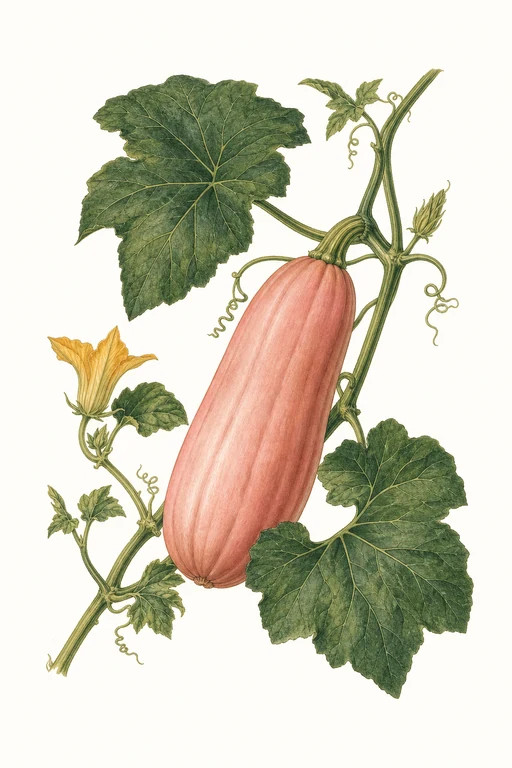
Sweetly fragrant flesh meets a softly blushing exterior in Pink Banana, a pie pumpkin prized for its tender, velvety texture and gently sweet, warm flavor.
At maturity, the fruit’s elongated “banana” form is wrapped in a delicate pink skin that deepens to a rosy glow, while the interior turns rich and smooth for luscious baked favorites and comforting purées. Grow it for a standout harvest—one that looks as special as it tastes, with dependable pie-pumpkin performance from a home garden plot.
Light: Full SunMaturity: 110 DaysHabit: Vine
Location not set yet
Location not set yet
Enter your ZIP for local crop dates
Pink Banana Planting Dates by USDA Zone
Estimated US hardiness-zone windows for sow, transplant, and harvest. Enter a US ZIP above for exact local dates, or open a zone below.
| Zone | Start Indoors | Sow / Transplant | Harvest |
|---|---|---|---|
| Zone 1a | Protected Environment Only | ||
| Zone 1b | Protected Environment Only | ||
| Zone 2a | Protected Environment Only | ||
| Zone 2b | Protected Environment Only | ||
| Zone 3a | Protected Environment Only | ||
| Zone 3b | May 5th | May 19th | Sep 6th – Sep 21st |
| Zone 4a | May 1st | May 15th | Sep 2nd – Sep 24th |
| Zone 4b | Apr 29th | May 13th | Aug 31st – Sep 27th |
| Zone 5a | Apr 24th | May 8th | Aug 26th – Sep 30th |
| Zone 5b | Apr 20th | May 4th | Aug 22nd – Oct 5th |
| Zone 6a | Apr 17th | May 1st | Aug 19th – Oct 10th |
| Zone 6b | Apr 11th | Apr 25th | Aug 13th – Oct 16th |
| Zone 7a | Apr 6th | Apr 20th | Aug 8th – Oct 20th |
| Zone 7b | Mar 27th | Apr 10th | Jul 29th – Oct 28th |
| Zone 8a | Mar 18th | Apr 1st | Jul 20th – Nov 5th |
| Zone 8b | Mar 9th | Mar 23rd | Jul 11th – Nov 12th |
| Zone 9a | Feb 20th | Mar 6th | Jun 24th – Nov 26th |
| Zone 9b | Jan 26th | Feb 9th | May 30th – Dec 9th |
| Zone 10a | Continuous Production | ||
| Zone 10b | Continuous Production | ||
| Zone 11a | Continuous Production | ||
| Zone 11b | Continuous Production | ||
| Zone 12a | Continuous Production | ||
| Zone 12b | Continuous Production | ||
| Zone 13a | Continuous Production | ||
| Zone 13b | Continuous Production | ||
Crop Details
| Trait | Value |
|---|---|
| Days to Maturity | 110 |
| Sun Requirements | Full Sun |
| Growth Habit | Vine |
| Support Needed | Trellis |
| Planting Depth | Normal |
| Germination Temp (°F) | 70 |
| Min Soil Temp (°F) | 65 |
| Min Night Temp (°F) | 55 |
| Harden Off (days) | 12 |
Culinary Notes

Chef's Note
This pie-class pumpkin turns creamy fast, so it’s built for custardy fillings and purées where you want a velvety mouthfeel instead of stringiness. The warm sweetness plays especially well with browned fats and spice—bake it until concentrated, then blend smooth for maximum silk.

Best Uses
- baked pie filling—cook down and thicken until silky, not watery
- slow-roasted cubes for caramel edges and creamy centers
- velvety purée for soups, ravioli filling, or a spoonable mash
- smooth roasting-to-blend for custardy pumpkin-style custards

Flavor Profile

Frequently Asked Questions
What pest or disease commonly affects Cucurbita maxima (Pink Banana squash), and what should I do if I see it?
How often should I water Cucurbita maxima during the main growing phase?
How can I tell when Pink Banana (Cucurbita maxima) is ready to harvest?
Sowing Tips

Transplant Conditions
Wait until soil reaches 65°F and nights stay above 55°F before moving outdoors. Harden off for 12 days first.

Direct Sow Preferred
Sensitive roots — does not transplant well. If starting indoors, use biodegradable pots and disturb roots as little as possible when moving outdoors.
Expert Note

For best size and sweetness in a “jumbo” squash, water deeply but avoid wet foliage, and keep the vines well-trained with adequate spacing.