
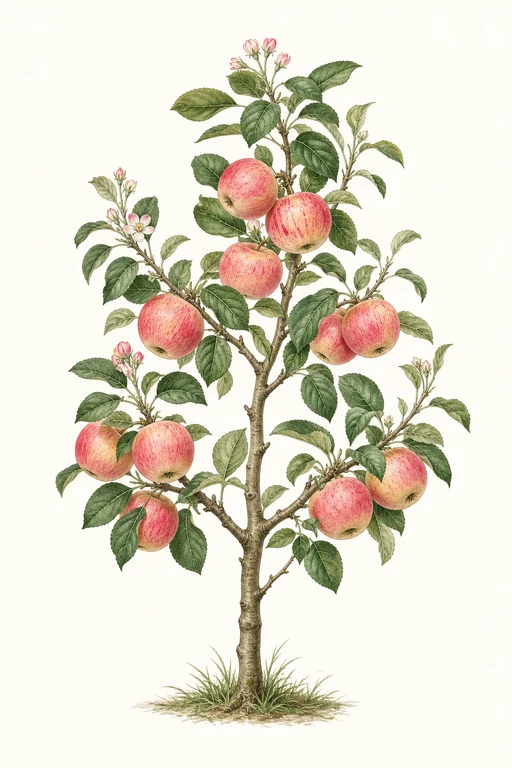
Pink Lady Gala
Crisp as a cool morning breeze, Pink Lady Gala brings a luminous blush over a pale, creamy base—sweet-tart and intensely aromatic with a fine, juicy snap.
The flesh stays tender yet firm, making it a standout for fresh enjoyment and for bright, rosy preserves that capture its fragrant character. Grow this showy orchard gem for a season of fragrant blossoms and fruit that looks as radiant as it tastes.
Light: Full SunHabit: Shrub
Planting schedules and alerts are optimized for Columbus (Zone 6b).
Crop Dates
| Milestone | Date |
|---|---|
| Start Indoors | Direct Sow |
| Last Frost | Apr 25th |
| Transplant / Sow Outdoors | Apr 25th |
| Harvest Begins | Apr 25th |
| Harvest Ends | Oct 16th |
Crop Details
| Trait | Value |
|---|---|
| Days to Maturity | N/A |
| Sun Requirements | Full Sun |
| Growth Habit | Shrub |
| Support Needed | None |
| Planting Depth | Normal |
| Germination Temp (°F) | 60 |
| Min Soil Temp (°F) | 50 |
| Min Night Temp (°F) | 40 |
| Harden Off (days) | Not Required |
Culinary Notes

Chef's Note
Pink Lady Gala’s standout is that lively sweet-tart balance paired with an intensely aromatic, juicy crunch—so it doesn’t just taste bright, it *stays* bright on the palate. It’s a great choice when you want apple flavor with structural bite, whether you’re slicing for freshness or preserving to trap that perfume.

Best Uses
- raw-eating slices that hold crunch against yogurt or nuts
- quick sautées or roast for pan sauces (keeps shape, doesn’t turn to mush)
- rosy preserves/jams that taste perfumed rather than cooked-out
- thin-peeled apple slaws with a sharp vinaigrette for high-crunch texture

Flavor Profile

Kitchen Pairings
Frequently Asked Questions
What pests or diseases commonly affect Malus domestica (apple) and what should I do if I see them?
How often should I water Malus domestica during the main growing season?
How can I tell when Malus domestica ‘Pink Lady Gala’ apples are ready to harvest?
Sowing Tips

Transplant Conditions
Wait until soil reaches 50°F and nights stay above 40°F before moving outdoors.
Expert Note

For best results, plant with a compatible pollinizer nearby and use clean, well-drained soil while keeping the graft union above the soil line.