
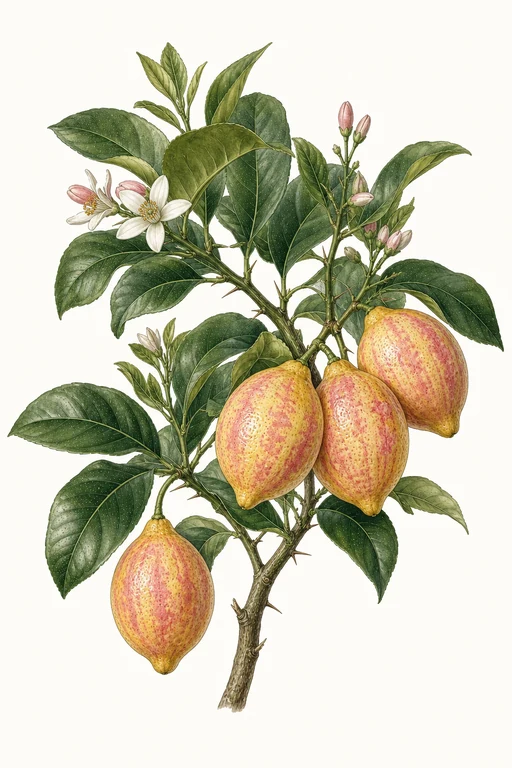
Pink Variegated Eureka
A luminous blush ripens on the rind—Pink Variegated Eureka brings a rare, candy-satin look to the classic lemon form, with streaks of soft rose threading through warm yellow.
The fruit’s flesh is tender and juicy, offering a bright, tangy snap balanced by a gentle sweetness that makes it unforgettable fresh and especially striking when showcased whole. Grow this standout for its ornamental fruiting beauty and its vivid, conversation-starting color that turns every harvest into a living centerpiece.
Light: Full SunMaturity: 720 DaysHabit: Shrub
Planting schedules and alerts are optimized for Columbus (Zone 6b).
Crop Dates
| Milestone | Date |
|---|---|
| Last Frost | Apr 25th |
| Growing Approach | Protected Environment Only |
Crop Details
| Trait | Value |
|---|---|
| Days to Maturity | 720 |
| Sun Requirements | Full Sun |
| Growth Habit | Shrub |
| Support Needed | None |
| Planting Depth | Normal |
| Germination Temp (°F) | 75 |
| Min Soil Temp (°F) | 60 |
| Min Night Temp (°F) | 50 |
| Harden Off (days) | 10 |
Culinary Notes

Chef's Note
Pink Variegated Eureka is built for brightness—its juice stays snappy and clean, while the slight sweetness keeps it from tasting harsh in raw applications. Use it where the color and aroma can earn their keep: thin slices, fast reductions, and dressings that don’t hide under heavy sweetness.

Best Uses
- juice-forward dressings where you want clean tang (tarator, quick vinaigrettes)
- whole-fruit presentation—thin-sliced garnish on seafood or crudo
- zesty marinades and pan sauces that need quick reduction without turning bitter
- citrus-forward desserts where it stays vivid (tart glaze, curd, sorbet)

Flavor Profile

Kitchen Pairings
Frequently Asked Questions
What’s a common citrus problem on Citrus limon (lemon) and how do I treat it?
How often should I water a lemon tree (Citrus limon) during the main growing phase?
How can I tell when Pink Variegated Eureka lemons (Citrus limon) are ready to harvest?
Sowing Tips

Transplant Conditions
Wait until soil reaches 60°F and nights stay above 50°F before moving outdoors. Harden off for 10 days first.
Expert Note

In continental climates, grow Pink Variegated Eureka lemon in a container and keep it above 50°F, moving indoors before cool nights to protect flowering and fruit set.