
Pink Variegated Lemon
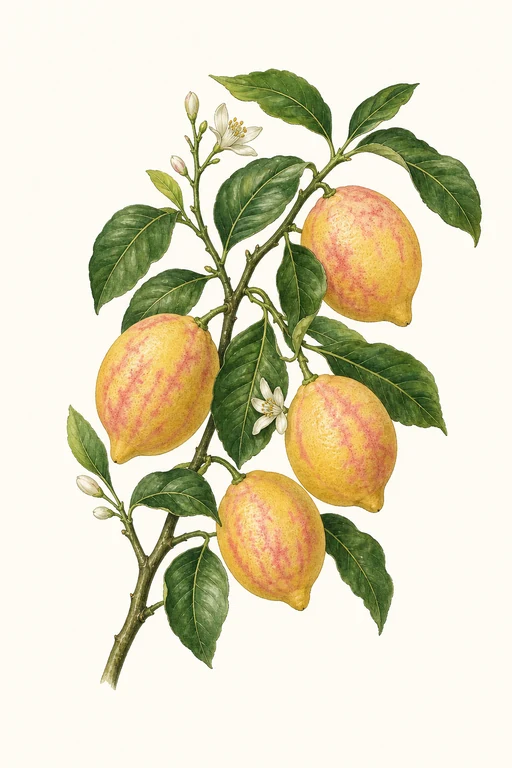
Fragrant blossoms give way to a luminous harvest of Pink Variegated Lemon—zest-bright fruit with a softly mottled blush through the segments, like sunrise caught beneath a polished rind.
Expect a juicy, tangy bite with a delicate sweetness and a tender, fine-grained texture that shines in bright preserves, vivid sauces, and sparkling drinks. A standout for home gardeners who love ornamental fruiting as much as flavor, this lemon turns the tree into a living showpiece from spring bloom to late-season color.
Light: Full SunMaturity: 180 DaysHabit: Shrub
Planting schedules and alerts are optimized for Columbus (Zone 6b).
Crop Dates
| Milestone | Date |
|---|---|
| Last Frost | Apr 25th |
| Growing Approach | Protected Environment Only |
Crop Details
| Trait | Value |
|---|---|
| Days to Maturity | 180 |
| Sun Requirements | Full Sun |
| Growth Habit | Shrub |
| Support Needed | None |
| Planting Depth | Normal |
| Germination Temp (°F) | 70 |
| Min Soil Temp (°F) | 60 |
| Min Night Temp (°F) | 50 |
| Harden Off (days) | Not Required |
Culinary Notes

Chef's Note
This is a citrus that tastes like it smells—aggressive zest up front with a delicate sweet underline that makes curds and preserves feel silky instead of sharp. The rosy blush holds up when reduced, so you get both flavor and color without needing any tricks.

Best Uses
- fresh zest for finishing—microplane right before serving
- sparkling drinks and lemonades where the tang stays crisp
- pink-tinged preserves and curds (cooks to a glossy, rosy set)
- vivid pan sauces for fish and chicken, reduced until lacquered

Flavor Profile

Kitchen Pairings
Frequently Asked Questions
What pest or disease issue is most common on Citrus limon (Lisbon lemon types), and how should I treat it?
How often should I water Citrus limon during the main growing phase, and what soil moisture level should I aim for?
How can I tell when a Pink Variegated Lemon (Citrus limon) is ready to harvest?
Sowing Tips

Transplant Conditions
Wait until soil reaches 60°F and nights stay above 50°F before moving outdoors.
Expert Note

For home gardens, grow as a container plant in colder zones or only plant in-ground where you can consistently protect it from freezes; full sun and steady moisture drive better flowering and fruit set.