
Poblano
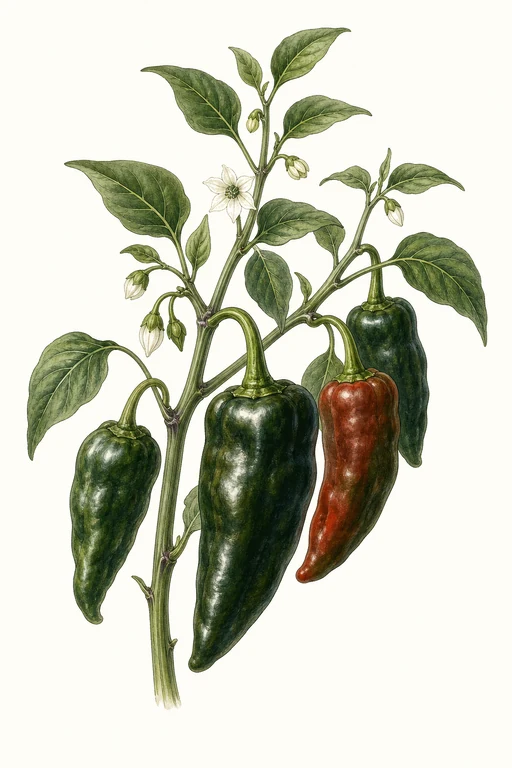
Aromatic and richly earthy, Poblano delivers a deep, warm-green allure that ripens toward a burnished red-brown—its flavor both smoky and gently hot, with a velvety, thick-walled bite.
The peppers are broad and tapered like small lanterns, holding their shape beautifully whether you’re roasting for bold charred notes, simmering into sauces, or drying toward ancho-style sweetness for later use. For home gardeners, Poblano is a satisfying 75-day crop that rewards steady warmth with peppers that feel substantial in the hand and sing with complexity on the palate.
Light: Full SunMaturity: 75 DaysHabit: Upright
Location not set yet
Location not set yet
Enter your ZIP for local crop dates
Poblano Planting Dates by USDA Zone
Estimated US hardiness-zone windows for sow, transplant, and harvest. Enter a US ZIP above for exact local dates, or open a zone below.
| Zone | Start Indoors | Sow / Transplant | Harvest |
|---|---|---|---|
| Zone 1a | Protected Environment Only | ||
| Zone 1b | Protected Environment Only | ||
| Zone 2a | Apr 6th | Jul 20th | Oct 3rd – Aug 29th |
| Zone 2b | Mar 27th | Jul 10th | Sep 23rd – Aug 25th |
| Zone 3a | Mar 27th | Jul 10th | Sep 23rd – Sep 1st |
| Zone 3b | Mar 31st | Jul 14th | Sep 27th – Sep 21st |
| Zone 4a | Mar 27th | Jul 10th | Sep 23rd – Sep 24th |
| Zone 4b | Mar 25th | Jul 8th | Sep 21st – Sep 27th |
| Zone 5a | Mar 20th | Jul 3rd | Sep 16th – Sep 30th |
| Zone 5b | Mar 16th | Jun 29th | Sep 12th – Oct 5th |
| Zone 6a | Mar 13th | Jun 26th | Sep 9th – Oct 10th |
| Zone 6b | Mar 7th | Jun 20th | Sep 3rd – Oct 16th |
| Zone 7a | Mar 2nd | Jun 15th | Aug 29th – Oct 20th |
| Zone 7b | Feb 20th | Jun 5th | Aug 19th – Oct 28th |
| Zone 8a | Feb 11th | May 27th | Aug 10th – Nov 5th |
| Zone 8b | Feb 2nd | May 18th | Aug 1st – Nov 12th |
| Zone 9a | Jan 16th | May 1st | Jul 15th – Nov 26th |
| Zone 9b | Dec 22nd | Apr 6th | Jun 20th – Dec 9th |
| Zone 10a | Continuous Production | ||
| Zone 10b | Continuous Production | ||
| Zone 11a | Continuous Production | ||
| Zone 11b | Continuous Production | ||
| Zone 12a | Continuous Production | ||
| Zone 12b | Continuous Production | ||
| Zone 13a | Continuous Production | ||
| Zone 13b | Continuous Production | ||
Crop Details
| Trait | Value |
|---|---|
| Days to Maturity | 75 |
| Sun Requirements | Full Sun |
| Growth Habit | Upright |
| Support Needed | Stake |
| Planting Depth | Normal |
| Germination Temp (°F) | 80 |
| Min Soil Temp (°F) | 60 |
| Min Night Temp (°F) | 50 |
| Harden Off (days) | 10 |
Culinary Notes

Chef's Note
Poblano’s thick walls and earthy heat make it the kind of pepper that survives long cooking without turning watery, whether charred over high flame or simmered down to a glossy sauce. It’s especially good when you want heat that’s smoky and rounded—more “warm glow” than sharp, searing bite.

Best Uses
- roast, peel, and stuff with cheese and meat; the flesh stays sturdy and doesn’t go soggy
- blend into a charred salsa or simmer into a dark, slow-reduced sauce
- slice for fajita-style sear where the walls caramelize at the edges
- dry to ancho-style pepper for sweet-savory rehydration in braises

Flavor Profile

Frequently Asked Questions
What pest or disease problem is most common on poblano (Capsicum annuum), and how can I address it?
How often should I water poblano during the main growing phase, and what soil moisture should I aim for?
How do I tell when poblano (Capsicum annuum) is ready to harvest?
Sowing Tips

Transplant Conditions
Wait until soil reaches 60°F and nights stay above 50°F before moving outdoors. Harden off for 10 days first.
Expert Note

For best poblano/ancho flavor, keep soil consistently warm and avoid cold shocks—transplant only when night temps stay above ~50°F and the soil is at least 60°F.