
Pollinator Mix
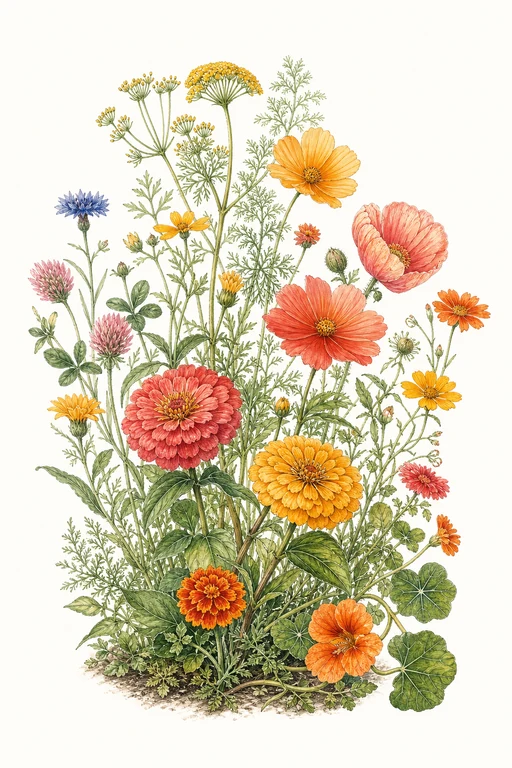
A living tapestry of color and bloom timing—Pollinator Mix is designed to lure beneficial insects with a steady, garden-wide rhythm of flowers.
Expect a rich medley of shapes and textures, from delicate, airy blossoms to sturdier bloom heads that hold their presence through the season. Ideal for gardeners who want a vibrant, pollinator-friendly landscape that supports thriving ecosystems while adding constant visual interest from spring into fall.
Light: Full SunMaturity: 90 DaysHabit: Spreading
Planting schedules and alerts are optimized for Columbus (Zone 6b).
Crop Dates
| Milestone | Date |
|---|---|
| Start Indoors | Direct Sow |
| Last Frost | Apr 25th |
| Transplant / Sow Outdoors | Apr 25th |
| Harvest Begins | Jul 24th |
| Harvest Ends | Oct 16th |
Crop Details
| Trait | Value |
|---|---|
| Days to Maturity | 90 |
| Sun Requirements | Full Sun |
| Growth Habit | Spreading |
| Support Needed | None |
| Planting Depth | Surface |
| Germination Temp (°F) | 65 |
| Min Soil Temp (°F) | 50 |
| Min Night Temp (°F) | 35 |
| Harden Off (days) | Not Required |
Frequently Asked Questions
What pests or diseases commonly affect a beneficial bug (pollinator) mix seed stand, and how can I prevent them?
How often should I water a pollinator mix during the main growing phase?
How can I tell when a pollinator mix is ready to harvest (for cut flowers or seed)?
Sowing Tips

Transplant Conditions
Wait until soil reaches 50°F and nights stay above 35°F before moving outdoors.
Expert Note

For best pollinator establishment, sow after the last spring frost and keep the seedbed consistently moist until germination, then water lightly as blooms begin.