
Pompon Blue Moon
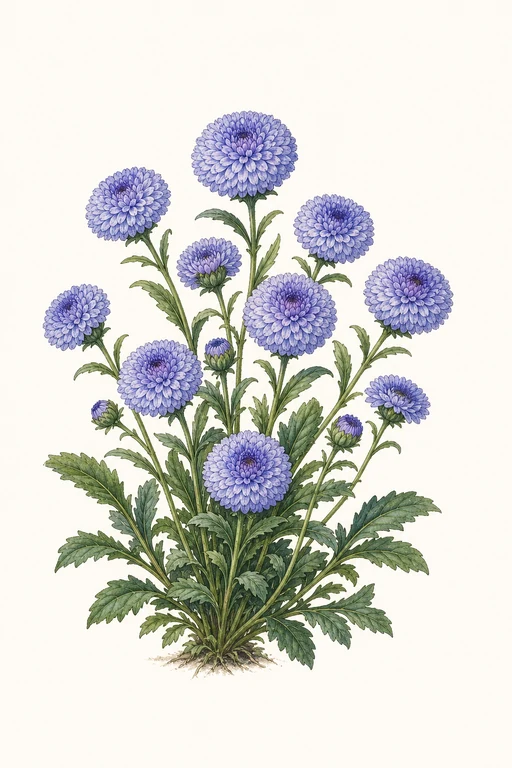
Pompon Blue Moon dazzles with a moonlit wash of cool blue-lavender, forming dense, perfectly rounded pompons that feel plush at first glance and look like velvet from across the garden.
Each compact bloom carries a double, tightly layered texture that holds its shape through the season, making it ideal for edging, containers, and long-lasting color in beds. Grow it for a steady parade of miniature “cloud” flowers that brighten borders and bring a refined, cottage-garden charm to every sunny corner.
Light: Full SunMaturity: 70 DaysHabit: Bush
Planting schedules and alerts are optimized for Columbus (Zone 6b).
Crop Dates
| Milestone | Date |
|---|---|
| Start Indoors | Mar 14th |
| Last Frost | Apr 25th |
| Transplant / Sow Outdoors | Apr 25th |
| Harvest Begins | Jul 4th |
| Harvest Ends | Oct 16th |
Crop Details
| Trait | Value |
|---|---|
| Days to Maturity | 70 |
| Sun Requirements | Full Sun |
| Growth Habit | Bush |
| Support Needed | None |
| Planting Depth | Surface |
| Germination Temp (°F) | 65 |
| Min Soil Temp (°F) | 55 |
| Min Night Temp (°F) | 50 |
| Harden Off (days) | 7 |
Culinary Notes

Chef's Note
Despite the ornamental look, these tiny double asters can be treated like a delicate edible flower—think light, cool perfume more than a punchy flavor. Use them sparingly so the layered petals stay pleasant on the tongue instead of going watery or perfumey.

Best Uses
- use as a cool garnish on chilled plates and salads
- top panna cotta, yogurt, or soft cheeses for a delicate perfume
- fold petals sparingly into simple syrups for light floral color
- steep petals briefly for tea or a gentle floral rinse

Flavor Profile

Kitchen Pairings
Frequently Asked Questions
What pest or disease most commonly affects Callistephus chinensis (pompon types), and how can I control it at home?
How often should I water Callistephus chinensis during the main growing phase?
How do I know when my Callistephus chinensis pompon blooms are ready to harvest?
Sowing Tips

Transplant Conditions
Wait until soil reaches 55°F and nights stay above 50°F before moving outdoors. Harden off for 7 days first.
Expert Note

Start indoors for earlier blooms, but keep seedlings cool and well-lit so they don’t stretch, then transplant after the soil has warmed and nights are reliably mild.