
Ponderosa
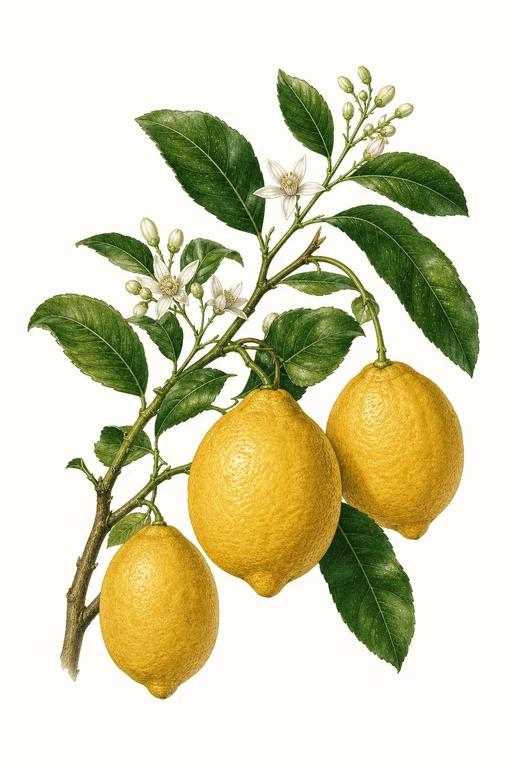
Sun-bright and unmistakably fragrant, Ponderosa Lemon brings a bold, sunny zest to the garden with fruit that feels substantial in the hand.
Its thick, dimpled rind and juicy, tangy interior deliver a bright lemon flavor with a satisfying, pulpy texture—ideal for making vivid preserves, sparkling beverages, and aromatic sauces. Grow it for the long season of anticipation: from flowering to harvest, Ponderosa rewards with a steady glow of fruit and a lingering citrus perfume.
Light: Full SunMaturity: 300 DaysHabit: Shrub
Planting schedules and alerts are optimized for Columbus (Zone 6b).
Crop Dates
| Milestone | Date |
|---|---|
| Last Frost | Apr 25th |
| Growing Approach | Protected Environment Only |
Crop Details
| Trait | Value |
|---|---|
| Days to Maturity | 300 |
| Sun Requirements | Full Sun |
| Growth Habit | Shrub |
| Support Needed | None |
| Planting Depth | Normal |
| Germination Temp (°F) | 70 |
| Min Soil Temp (°F) | 65 |
| Min Night Temp (°F) | 45 |
| Harden Off (days) | 10 |
Culinary Notes

Chef's Note
Ponderosa’s chunky rind and intensely fragrant juice make it ideal for cooking—zest stays aromatic while the pulp gives body to preserves and curds instead of thinning out. Use the rind early for marmalade-style intensity, and save the brightest juice for finishing so it keeps that sharp, clean snap.

Best Uses
- thick-cut candied rind or marmalade-style preserves
- sparkling lemonades and tepache-like fizzy drinks
- aromatic pan sauce for chicken or fish where citrus has to cling
- lemon curd or crème-speckled cream for a glossy tang

Flavor Profile

Kitchen Pairings
Frequently Asked Questions
Why are my Citrus limon leaves turning yellow with sticky residue, and what should I do?
How often should I water Citrus limon during active growth, and what soil moisture level should I maintain?
How can I tell when my Citrus limon is ready to harvest?
Sowing Tips

Transplant Conditions
Wait until soil reaches 65°F and nights stay above 45°F before moving outdoors. Harden off for 10 days first.
Expert Note

For Ponderosa lemon, prioritize a warm, sunny site with excellent drainage and frost protection plan—citrus failures are almost always cold/poor drainage, not seed timing.