
Purple Coneflower
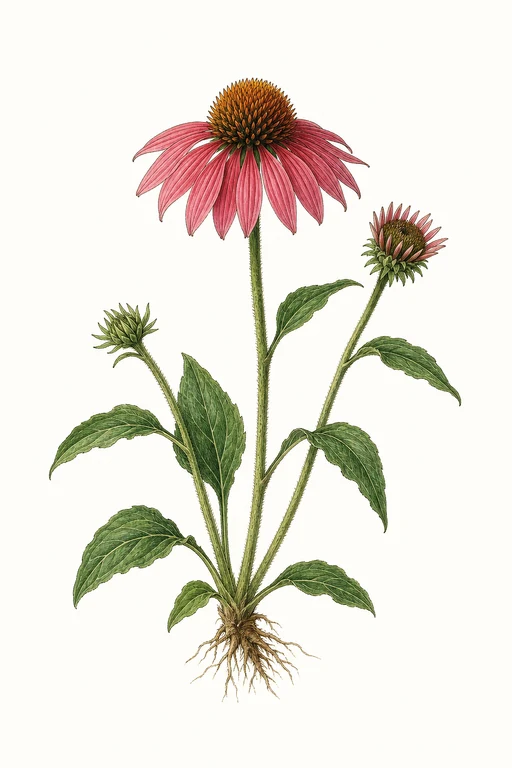
Velvety, rose-purple rays glow above sturdy stems, each bloom crowned with a sculptural, dark center that seems to hold the light.
Purple Coneflower offers a satisfying, slightly rugged texture in the garden—petals that keep their form and a prominent cone that deepens in color as the season advances. Grow it for long-lasting floral presence and pollinator appeal, with blooms that shine in beds, borders, and naturalized drifts through the heart of summer.
Light: Full SunMaturity: 90 DaysHabit: Upright
Planting schedules and alerts are optimized for Columbus (Zone 6b).
Crop Dates
| Milestone | Date |
|---|---|
| Start Indoors | Feb 28th |
| Last Frost | Apr 25th |
| Transplant / Sow Outdoors | Apr 25th |
| Harvest Begins | Jul 24th |
| Harvest Ends | Oct 16th |
Crop Details
| Trait | Value |
|---|---|
| Days to Maturity | 90 |
| Sun Requirements | Full Sun |
| Growth Habit | Upright |
| Support Needed | None |
| Planting Depth | Normal |
| Germination Temp (°F) | 70 |
| Min Soil Temp (°F) | 60 |
| Min Night Temp (°F) | 35 |
| Harden Off (days) | 7 |
Culinary Notes

Chef's Note
If you’re using purple coneflower, think more like a rugged, bitter-herb edible flower than a sweet floral—petals bring a dry, peppery bite and a velvety mouthfeel. Use it lightly and balance with fat or sweetness (cheese, pork, honey) so the bitterness reads as savory, not medicinal.

Best Uses
- use petals sparingly as a garnish for savory plates
- infuse petals/cone heads into vinegar or short-steep tea for a dry, herbal tang
- fold petals into compound butter for roasts and grilled meats

Flavor Profile

Kitchen Pairings
Frequently Asked Questions
What pest or disease commonly affects Echinacea purpurea, and how can I manage it?
How often should I water Echinacea purpurea during its main growing phase?
How do I tell when Echinacea purpurea is ready to harvest?
Sowing Tips

Transplant Conditions
Wait until soil reaches 60°F and nights stay above 35°F before moving outdoors. Harden off for 7 days first.
Expert Note

For best establishment, stratify seeds (cold treatment) and transplant only once soil is consistently workable and nights are mild.