
SproutSmart
SproutSmart™ Intelligent Garden Sowing

Queen Lime Blush

Family: Asteraceae Annual flowering plant

Planting Schedule

Provide your location or planting zone to unlock dates and add Queen Lime Blush to a garden.

Queen Lime Blush blooms with a luminous, lime-forward glow that blushes into soft apricot-pink at the petal edges—like a sunrise caught in full flower.

The petals form dense, layered rosettes with a velvety look and a sturdy, upright habit that holds its shape beautifully in the garden. Grow it for abundant cut-flower color: perfect for bouquets and long-lasting displays, with blooms that stay vivid from first opening through peak summer.

Light: Full SunMaturity: 70 DaysHabit: Upright
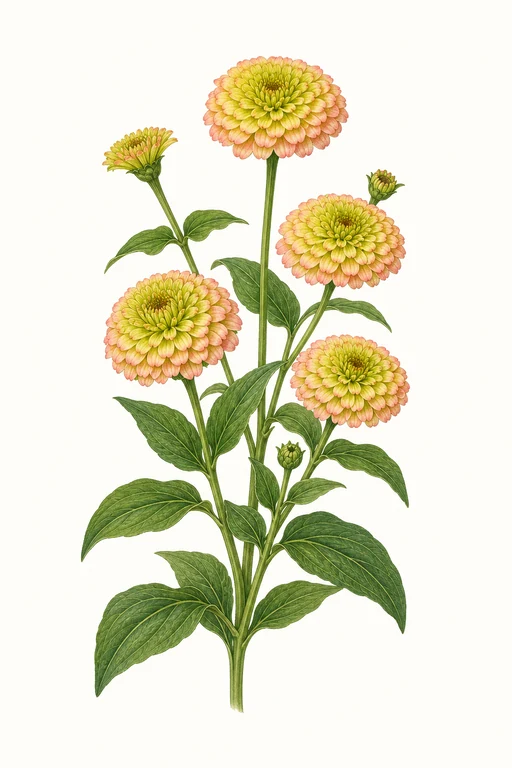
Botanical illustration of Queen Lime Blush

Location not set yet

Location not set yet

Enter your ZIP for local crop dates

Queen Lime Blush Planting Dates by USDA Zone

Estimated US hardiness-zone windows for sow, transplant, and harvest. Enter a US ZIP above for exact local dates, or open a zone below.

Zone Start Indoors Sow / Transplant Harvest
Zone 1a Protected Environment Only
Zone 1b Protected Environment Only
Zone 2a Apr 27th May 25th Aug 3rd – Aug 29th
Zone 2b Apr 17th May 15th Jul 24th – Aug 25th
Zone 3a Apr 17th May 15th Jul 24th – Sep 1st
Zone 3b Apr 21st May 19th Jul 28th – Sep 21st
Zone 4a Apr 17th May 15th Jul 24th – Sep 24th
Zone 4b Apr 15th May 13th Jul 22nd – Sep 27th
Zone 5a Apr 10th May 8th Jul 17th – Sep 30th
Zone 5b Apr 6th May 4th Jul 13th – Oct 5th
Zone 6a Apr 3rd May 1st Jul 10th – Oct 10th
Zone 6b Mar 28th Apr 25th Jul 4th – Oct 16th
Zone 7a Mar 23rd Apr 20th Jun 29th – Oct 20th
Zone 7b Mar 13th Apr 10th Jun 19th – Oct 28th
Zone 8a Mar 4th Apr 1st Jun 10th – Nov 5th
Zone 8b Feb 23rd Mar 23rd Jun 1st – Nov 12th
Zone 9a Feb 6th Mar 6th May 15th – Nov 26th
Zone 9b Jan 12th Feb 9th Apr 20th – Dec 9th
Zone 10a Continuous Production
Zone 10b Continuous Production
Zone 11a Continuous Production
Zone 11b Continuous Production
Zone 12a Continuous Production
Zone 12b Continuous Production
Zone 13a Continuous Production
Zone 13b Continuous Production

Crop Details

TraitValue
Days to Maturity70
Sun RequirementsFull SunFull sun
Growth HabitUpright
Support NeededNone
Planting DepthNormal
Germination Temp (°F)75
Min Soil Temp (°F)70
Min Night Temp (°F)55
Harden Off (days)7

Culinary Notes


Chef's Note

Ornamental zinnia variety marketed as a cut flower; while the payload says is_edible=true, there’s no reliable culinary use established for Zinnia petals here. I can’t responsibly invent flavor descriptors, pairings, or applications—treat it as non-food unless you can verify a trusted edible-petal source and safe preparation method.

Flavor Profile

Likely non-culinary ornamental flavor; floral esters only Not validated for edible-petal consumption

Frequently Asked Questions


What’s a common disease pest problem for Zinnia elegans (Queen Lime Blush), and how do I treat it?
Zinnia elegans is especially prone to powdery mildew, which shows up as a white, dusty coating on leaves and can start with lower leaves in humid weather. Water at the soil line (not overhead), improve airflow by spacing plants, and remove badly infected leaves early. If it keeps spreading, spray a labeled powdery mildew fungicide and repeat according to the label’s interval, targeting the undersides of leaves.
How often should I water Zinnia elegans during the main growing phase?
During active growth and flowering, keep the top 1 inch of soil evenly moist, but not soggy—water when it begins to dry out. Aim for about 1 inch of water per week total (more during heat waves), and always let excess water drain so roots don’t stay wet. Mulching lightly helps prevent moisture swings that can stress zinnias.
How can I tell when Queen Lime Blush (Zinnia elegans) is ready to harvest for cut flowers?
Harvest when flower heads are fully open and the petals show their mature color, typically about 70 days from sowing. For best vase life, pick in the morning when stems are turgid and the blooms are widest, before they start to look slightly flattened. Snip on a fresh, clean cut just above a leaf node to encourage branching and more blooms.