
Rama Tulsi
Rama Tulsi fills the garden with a vivid, living fragrance—cool minty lift with a gentle, peppery sweetness that lingers on the air when leaves brush past your fingers.
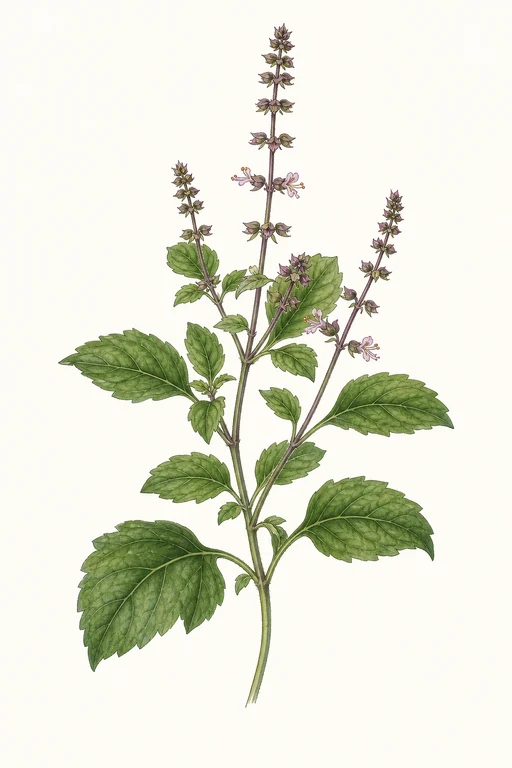
This Holy Basil forms an upright, branching plant with tender, oval leaves and abundant aromatic growth in about 60 days, rewarding harvests with a fresh, silky leaf texture. Grow Rama Tulsi for its signature aromatic presence in herbal infusions and fragrant blends, and for drying or preserving when you want that bright, green character on hand year-round.
Light: Full SunMaturity: 60 DaysHabit: Upright
Planting schedules and alerts are optimized for Columbus (Zone 6b).
Crop Dates
| Milestone | Date |
|---|---|
| Start Indoors | Mar 14th |
| Last Frost | Apr 25th |
| Transplant / Sow Outdoors | Jun 13th |
| Harvest Begins | Aug 12th |
| Harvest Ends | Oct 16th |
Crop Details
| Trait | Value |
|---|---|
| Days to Maturity | 60 |
| Sun Requirements | Full Sun |
| Growth Habit | Upright |
| Support Needed | None |
| Planting Depth | Normal |
| Germination Temp (°F) | 70 |
| Min Soil Temp (°F) | 60 |
| Min Night Temp (°F) | 50 |
| Harden Off (days) | 10 |
Culinary Notes

Chef's Note
Rama Tulsi has that unmistakable holy-basil perfume—minty-cool with a faint pepper-sweet edge—so it’s best treated like an aromatic, not a heavy herb. Tear it at the last second to keep the leaf silky and the aroma front-and-center, whether you’re steeping or dusting it over warm protein.

Best Uses
- steeped tea—hot or iced—for a clean, aromatic drink
- torn-leaf topping for fruit (especially mango/papaya) and yogurt
- infuse into syrup or vinegar for a green, fragrant tang
- dry and grind for a perfumed finishing sprinkle on rice or grilled chicken

Flavor Profile

Kitchen Pairings
Frequently Asked Questions
What pest or disease most commonly affects Ocimum tenuiflorum (Rama Tulsi), and what should I do?
How often should I water Rama Tulsi during active growth, and what soil moisture level should I aim for?
How can I tell when Rama Tulsi is ready to harvest?
Sowing Tips

Transplant Conditions
Wait until soil reaches 60°F and nights stay above 50°F before moving outdoors. Harden off for 10 days first.
Expert Note

For best growth and aroma, start indoors in a warm, steady environment and transplant only after nights reliably stay above ~50°F; pinch early to encourage branching.