
Raspberry
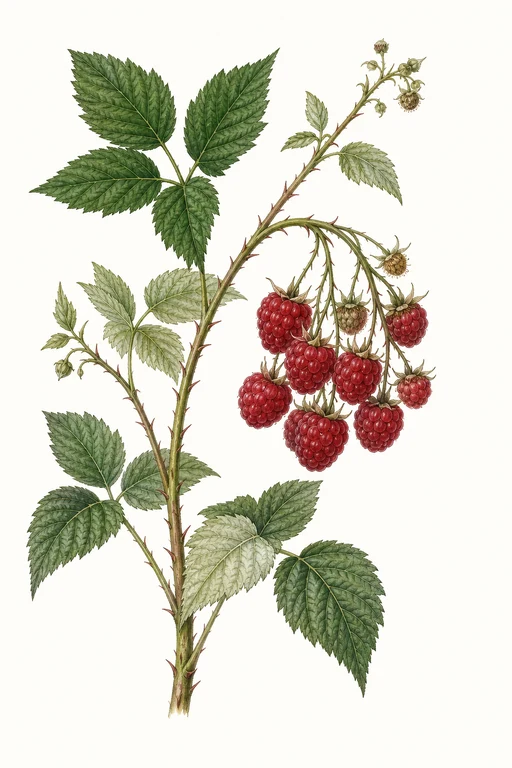
Sun-warmed canes bear Raspberry’s jewel-bright berries—tender, aromatic, and bursting with a sweet-tart perfume that lingers on the tongue.
Each fruit is a soft, spoonable cluster with a delicate, juicy texture and a vivid red glow that looks as good as it tastes. Grow Raspberry for fresh enjoyment straight from the patch, plus luscious preserves and vibrant sauces that capture its signature berry brightness.
Light: Full SunMaturity: 365 DaysHabit: Shrub
Planting schedules and alerts are optimized for Columbus (Zone 6b).
Crop Dates
| Milestone | Date |
|---|---|
| Last Frost | Apr 25th |
| Growing Approach | Protected Environment Only |
Crop Details
| Trait | Value |
|---|---|
| Days to Maturity | 365 |
| Sun Requirements | Full Sun |
| Growth Habit | Shrub |
| Support Needed | Trellis |
| Planting Depth | Normal |
| Germination Temp (°F) | 60 |
| Min Soil Temp (°F) | 45 |
| Min Night Temp (°F) | 28 |
| Harden Off (days) | Not Required |
Culinary Notes

Chef's Note
Raspberry’s high perfume-to-sugar ratio means it tastes best when treated gently—cold, lightly sweetened, or cooked just long enough to loosen the fruit into a glossy sauce. Its tender berries collapse into silk, so you want fats/creamy bases and sharp citrus that can stand up to the bright, tart finish.

Best Uses
- fresh eating with minimal interference (thinly sugared or just cold)
- quick maceration for spooning over yogurt or panna cotta
- hot berry sauce—briefly cooked to keep the aroma vivid
- thick preserves or jam where the seeds stay pleasantly present

Flavor Profile

Kitchen Pairings
Frequently Asked Questions
What pest or disease most often affects Rubus idaeus (raspberry), and how can I manage it?
How often should I water Rubus idaeus during the main growing phase, and what soil moisture level should I aim for?
How do I tell when Rubus idaeus raspberries are ready to harvest?
Sowing Tips

Transplant Conditions
Wait until soil reaches 45°F and nights stay above 28°F before moving outdoors.
Expert Note

Plant red raspberries in a weed-free strip with good drainage, then prune old fruiting canes after harvest and thin new canes for airflow.