
Rattail Radish
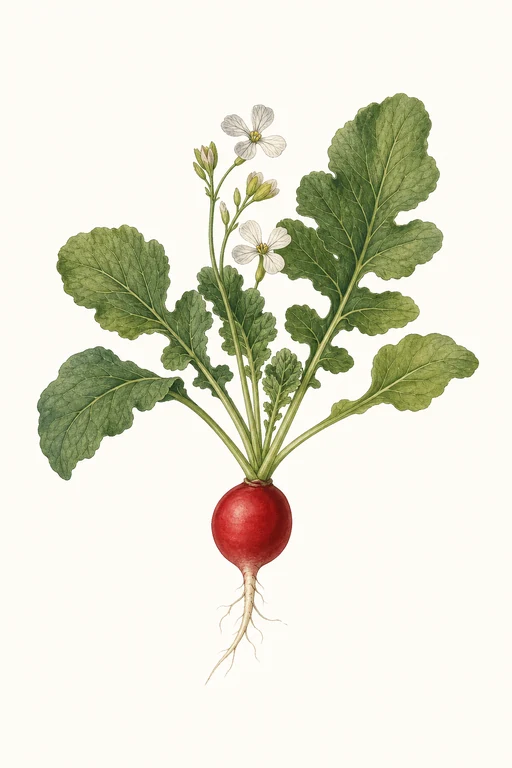
Fragrant, peppery pods unfurl on Rattail Radish, turning the garden into a living bouquet of crisp green and soft lavender blooms.
At maturity, the slender, dangling seed pods hold a tender snap and a bright, radish-sharp flavor that’s especially prized for quick pickling and lively fresh use. Grow it for its distinctive rat-tail silhouette—an edible spectacle that keeps producing as long as you harvest the pods young.
Light: Full SunMaturity: 45 DaysHabit: Taproot
Crop Dates : 6b
| Milestone | Date |
|---|---|
| Start Indoors | Direct Sow |
| Last Frost | Apr 25th |
| Transplant / Sow Outdoors | Apr 25th |
| Harvest Begins | Jun 9th |
| Harvest Ends | Oct 16th |
Crop Details
| Trait | Value |
|---|---|
| Days to Maturity | 45 |
| Sun Requirements | Full Sun |
| Growth Habit | Taproot |
| Support Needed | None |
| Planting Depth | Normal |
| Germination Temp (°F) | 55 |
| Min Soil Temp (°F) | 40 |
| Min Night Temp (°F) | 28 |
| Harden Off (days) | Not Required |
Culinary Notes

Chef's Note
Rat-tail radish pods are edible-pod radishes—harvest young and they stay crisp with a clean, radish-sharp bite that survives vinegar without going limp. Use them like you’d use quick-pickled radish: fast, bright, and aggressively crunchy on top of rich, salty foods.

Best Uses
- quick pickling (vinegar-salt brine) for punchy crunch
- toss raw into salads for a peppery, snappy accent
- serve lightly blistered or charred as a radish-flavored side
- use as a finishing garnish on noodles, tacos, or rice bowls for sudden heat

Flavor Profile

Kitchen Pairings
Frequently Asked Questions
What pest or disease is most likely on Raphanus sativus (rattail radish), and how can I prevent it?
How often should I water rattail radish during its main growing phase?
How do I know when Raphanus sativus (rattail radish) is ready to harvest?
Sowing Tips

Transplant Conditions
Wait until soil reaches 40°F and nights stay above 28°F before moving outdoors.
Expert Note

Sow seed pods in warm, consistently moist soil and harvest the pods young (before they toughen) for the best flavor.