
Red Gold
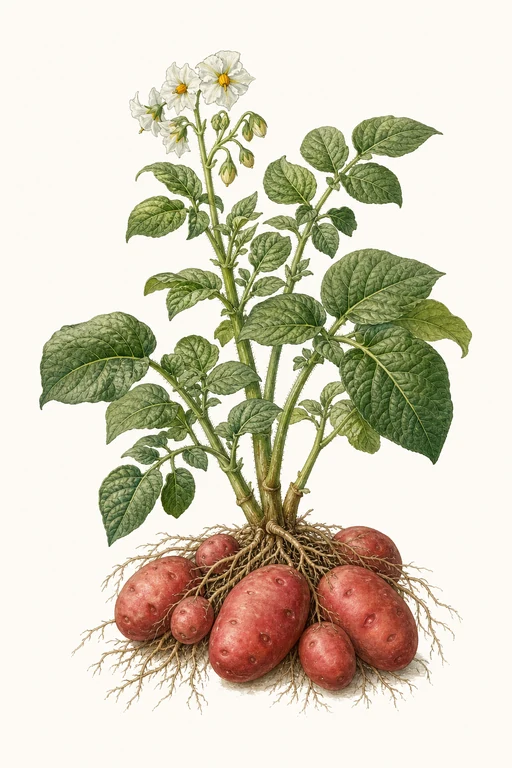
A golden interior under a burnished red jacket—Red Gold potatoes offer a luminous, buttery flavor with a fine, creamy texture that feels almost velvety when cooked.
Their oval-to-oblong tubers mature in a satisfying rhythm around 90 days, delivering dependable harvests for gardeners who love heirloom character. Grow Red Gold for roasting trays, pan-frying favorites, and rich mashes—its color and texture make every dish look as good as it tastes.
Light: Full SunMaturity: 90 DaysHabit: Spreading
Crop Dates : 2a
| Milestone | Date |
|---|---|
| Start Indoors | Direct Sow |
| Last Frost | May 25th |
| Transplant / Sow Outdoors | May 25th |
| Harvest Begins | Aug 23rd |
| Harvest Ends | Aug 29th |
Crop Details
| Trait | Value |
|---|---|
| Days to Maturity | 90 |
| Sun Requirements | Full Sun |
| Growth Habit | Spreading |
| Support Needed | None |
| Planting Depth | Normal |
| Germination Temp (°F) | 55 |
| Min Soil Temp (°F) | 45 |
| Min Night Temp (°F) | 28 |
| Harden Off (days) | Not Required |
Culinary Notes

Chef's Note
Red Gold’s golden interior goes from fluffy to almost velvety without needing much help, so it’s tailor-made for mashes and pan-fried potatoes that need creamy center, crisp boundary. Skip the sharp alliums—its naturally buttery sweetness already carries the flavor.

Best Uses
- roasting trays where the skins go crisp and the centers stay creamy
- pan-frying into browned edges with a tender, custardy interior
- old-school mashed potatoes with minimal additions for a silken mouthfeel
- chunky potato salads where the pieces hold together without turning gluey

Flavor Profile

Kitchen Pairings
Frequently Asked Questions
What pest or disease most often affects Solanum tuberosum (potato), and what should I do if I see it?
How often should I water potatoes during the main growing phase, and what soil moisture level do they need?
How can I tell when my potatoes (Solanum tuberosum) are ready to harvest?
Sowing Tips

Transplant Conditions
Wait until soil reaches 45°F and nights stay above 28°F before moving outdoors.
Expert Note

Plant seed potatoes when soil is workable and cool (they’ll thrive in spring temps), and avoid high heat stress by keeping soil evenly moist as tubers form.