
Red Shallot
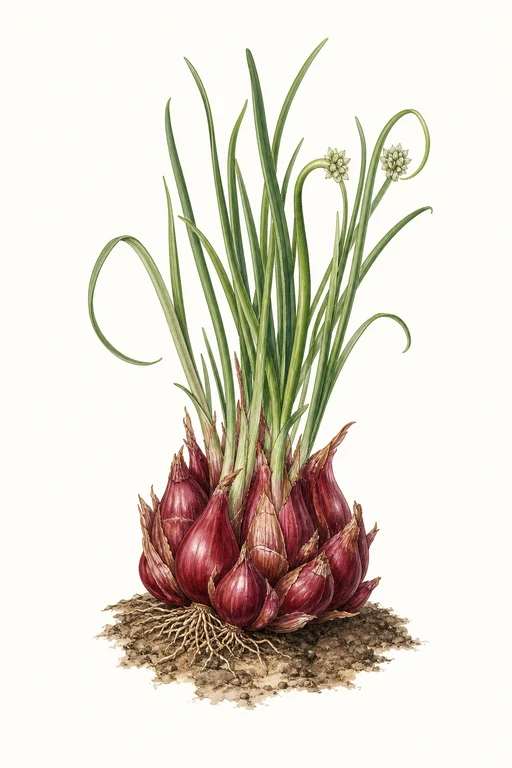
Sweetly aromatic and richly savory, Red Shallot brings a deep, wine-red skin that slips away to reveal a tender, rosy-tinged interior.
At maturity it forms neat, clustered bulbs with a fine, silky texture—ideal for building bold flavor in sautés, sauces, and slow-simmered favorites, or for quick pickling when you want a tangy bite. Grow it for dependable harvests around 75 days, with bulbs that store well and taste even better as they mellow.
Light: Full SunMaturity: 75 DaysHabit: Bulbing
Planting schedules and alerts are optimized for Columbus (Zone 6b).
Crop Dates
| Milestone | Date |
|---|---|
| Start Indoors | Direct Sow |
| Last Frost | Apr 25th |
| Transplant / Sow Outdoors | Apr 25th |
| Harvest Begins | Jul 9th |
| Harvest Ends | Oct 16th |
Crop Details
| Trait | Value |
|---|---|
| Days to Maturity | 75 |
| Sun Requirements | Full Sun |
| Growth Habit | Bulbing |
| Support Needed | None |
| Planting Depth | Normal |
| Germination Temp (°F) | 70 |
| Min Soil Temp (°F) | 50 |
| Min Night Temp (°F) | 35 |
| Harden Off (days) | Not Required |
Culinary Notes

Chef's Note
Red shallots trade the harshness you get from bigger onions for a sweeter, rosier allium character that cooks down into something silky rather than stewy. Use them where you want flavor to melt—like a sauce’s backbone—or where their tangy bite can stand up on its own after quick pickling.

Best Uses
- fast sautéing for glossy, evenly cooked sweetness
- slow-simmered sauces and braises where it melts into the base
- thin slicing for sharp, juicy raw use that won’t overpower
- quick pickling for a tangy, ruby-colored crunch

Flavor Profile

Kitchen Pairings
Frequently Asked Questions
What pest or disease commonly affects red shallots (Allium cepa var. aggregatum), and how can I treat it?
How often should I water red shallots during the main growing phase, and what soil moisture level do they need?
How do I tell when red shallots (Allium cepa var. aggregatum) are ready to harvest?
Sowing Tips

Transplant Conditions
Wait until soil reaches 50°F and nights stay above 35°F before moving outdoors.
Expert Note

For the sweetest, best-formed bulbs, keep seedlings/sets weed-free and water consistently through bulb formation; stop watering slightly before harvest.