
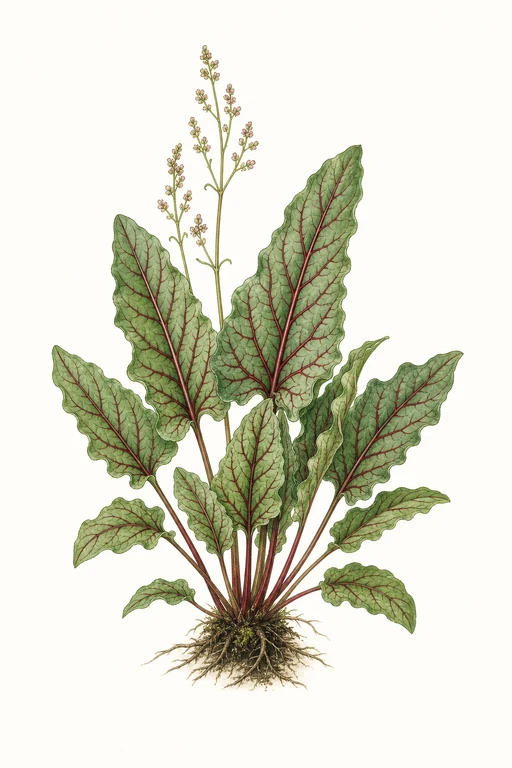
Red Veined Sorrel
Tender young leaves unfurl with a vivid, red-veined drama—crisp, bright, and pleasantly tart, with a clean sorrel tang that livens every harvest.
Red Veined Sorrel forms a compact rosette of slender, arrow-leaning leaves whose veins read like fine crimson ink against cool green. Grow it for fresh salads and quick sautés, or for stirring into sauces and soups where its lively bite shines through.
Light: Part SunMaturity: 40 DaysHabit: Rosette
Planting schedules and alerts are optimized for Columbus (Zone 6b).
Crop Dates
| Milestone | Date |
|---|---|
| Start Indoors | Mar 28th |
| Last Frost | Apr 25th |
| Transplant / Sow Outdoors | Apr 25th |
| Harvest Begins | Jun 4th |
| Harvest Ends | Oct 16th |
Crop Details
| Trait | Value |
|---|---|
| Days to Maturity | 40 |
| Sun Requirements | Part Sun |
| Growth Habit | Rosette |
| Support Needed | None |
| Planting Depth | Normal |
| Germination Temp (°F) | 60 |
| Min Soil Temp (°F) | 40 |
| Min Night Temp (°F) | 28 |
| Harden Off (days) | 5 |
Culinary Notes

Chef's Note
Red Veined Sorrel tastes like a fresh, green hit of lemon—crisp when raw, then pleasantly soft with a tang that survives brief heat. Choose it when you want acidity that stays bright (not vinegary) and finishes a dish cleanly, especially with rich dairy or eggs that can round its edge without muting it.

Best Uses
- quick sauté (just until wilted) to keep the tang from going dull
- raw salad or shaved-leaf service with vinaigrette—no heavy cream needed
- stir into warm butter or pan sauce off-heat for a sharp, silky gloss
- use as the quick-acid lift in soups and spring purees where you want bite, not sweetness

Flavor Profile

Kitchen Pairings
Frequently Asked Questions
What pest or disease most commonly affects Rumex sanguineus (red veined sorrel), and how do I treat it?
How often should I water red veined sorrel during its main growing phase?
How can I tell when Rumex sanguineus is ready to harvest?
Sowing Tips

Transplant Conditions
Wait until soil reaches 40°F and nights stay above 28°F before moving outdoors. Harden off for 5 days first.
Expert Note

Sow for cool-weather growth—flavor is best before heat makes sorrel bolt and turn more tart.