
Regular Pink Banana
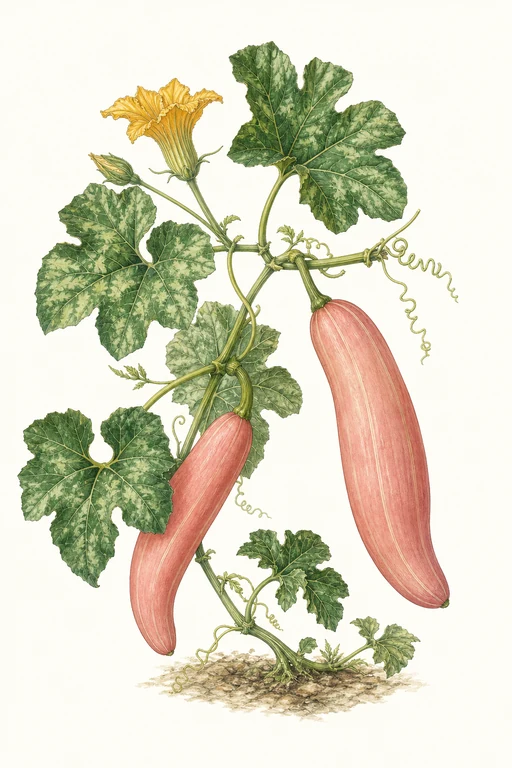
Sink your senses into Regular Pink Banana’s softly blushing flesh—an inviting pink-rose tone that deepens as the fruit matures.
This Pie Pumpkin forms a classic, elongated “banana” silhouette with firm, fine-textured interior flesh, ideal for thick, velvety preparations where its color and richness shine. Grow it for a showpiece harvest that’s as beautiful on the vine as it is satisfying in the pan, with dependable pie-class performance at about 100 days.
Light: Full SunMaturity: 100 DaysHabit: Vine
Location not set yet
Location not set yet
Enter your ZIP for local crop dates
Regular Pink Banana Planting Dates by USDA Zone
Estimated US hardiness-zone windows for sow, transplant, and harvest. Enter a US ZIP above for exact local dates, or open a zone below.
| Zone | Start Indoors | Sow / Transplant | Harvest |
|---|---|---|---|
| Zone 1a | Protected Environment Only | ||
| Zone 1b | Protected Environment Only | ||
| Zone 2a | Protected Environment Only | ||
| Zone 2b | May 1st | May 15th | Aug 23rd – Aug 25th |
| Zone 3a | May 1st | May 15th | Aug 23rd – Sep 1st |
| Zone 3b | May 5th | May 19th | Aug 27th – Sep 21st |
| Zone 4a | May 1st | May 15th | Aug 23rd – Sep 24th |
| Zone 4b | Apr 29th | May 13th | Aug 21st – Sep 27th |
| Zone 5a | Apr 24th | May 8th | Aug 16th – Sep 30th |
| Zone 5b | Apr 20th | May 4th | Aug 12th – Oct 5th |
| Zone 6a | Apr 17th | May 1st | Aug 9th – Oct 10th |
| Zone 6b | Apr 11th | Apr 25th | Aug 3rd – Oct 16th |
| Zone 7a | Apr 6th | Apr 20th | Jul 29th – Oct 20th |
| Zone 7b | Mar 27th | Apr 10th | Jul 19th – Oct 28th |
| Zone 8a | Mar 18th | Apr 1st | Jul 10th – Nov 5th |
| Zone 8b | Mar 9th | Mar 23rd | Jul 1st – Nov 12th |
| Zone 9a | Feb 20th | Mar 6th | Jun 14th – Nov 26th |
| Zone 9b | Jan 26th | Feb 9th | May 20th – Dec 9th |
| Zone 10a | Continuous Production | ||
| Zone 10b | Continuous Production | ||
| Zone 11a | Continuous Production | ||
| Zone 11b | Continuous Production | ||
| Zone 12a | Continuous Production | ||
| Zone 12b | Continuous Production | ||
| Zone 13a | Continuous Production | ||
| Zone 13b | Continuous Production | ||
Crop Details
| Trait | Value |
|---|---|
| Days to Maturity | 100 |
| Sun Requirements | Full Sun |
| Growth Habit | Vine |
| Support Needed | Trellis |
| Planting Depth | Normal |
| Germination Temp (°F) | 75 |
| Min Soil Temp (°F) | 65 |
| Min Night Temp (°F) | 55 |
| Harden Off (days) | 10 |
Culinary Notes

Chef's Note
A pie-class pumpkin with fine, firm interior—when it roasts or steams, it breaks down into a smooth purée instead of watery pulp. That makes Regular Pink Banana especially good for rich, spoon-thick fillings and soups where you want the texture to stay luxurious through heat and reduction.

Best Uses
- thick pumpkin purée for silky pie filling
- roasting into spoonable wedges that caramelize at the edges
- slow-cooked soup or bisque where it turns velvety without thinning

Flavor Profile

Frequently Asked Questions
What pest or disease is most common on Cucurbita maxima (pink banana type), and how do I control it?
How often should I water Cucurbita maxima during the main growing phase to support steady growth?
How can I tell when my Cucurbita maxima (pink banana type) is ready to harvest?
Sowing Tips

Transplant Conditions
Wait until soil reaches 65°F and nights stay above 55°F before moving outdoors. Harden off for 10 days first.

Direct Sow Preferred
Sensitive roots — does not transplant well. If starting indoors, use biodegradable pots and disturb roots as little as possible when moving outdoors.
Expert Note

For the best fruit set, keep the soil evenly moist during flowering and use floating row cover early to limit squash vine borer damage while vines establish.