
Rhubarb
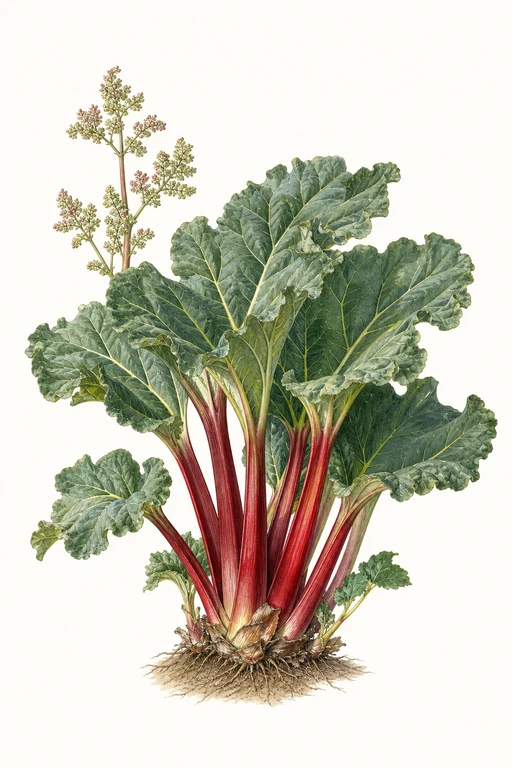
Silky, jewel-toned stalks rise with a cool, crisp snap—deep ruby red that fades to rosy highlights as they mature.
Rhubarb’s leaves are broad and substantial, offering a lush, slightly mineral bite that shines in bold, simmered preparations and bright, quick sauces. Grow it for generous harvests from a sturdy, rooted crown, then enjoy the tender stalk texture that turns richly colored and beautifully fragrant as it settles into its 60-day rhythm.
Light: Full SunMaturity: 60 DaysHabit: Rosette
Planting schedules and alerts are optimized for Columbus (Zone 6b).
Crop Dates
| Milestone | Date |
|---|---|
| Start Indoors | Direct Sow |
| Last Frost | Apr 25th |
| Transplant / Sow Outdoors | Apr 25th |
| Harvest Begins | Jun 24th |
| Harvest Ends | Oct 16th |
Crop Details
| Trait | Value |
|---|---|
| Days to Maturity | 60 |
| Sun Requirements | Full Sun |
| Growth Habit | Rosette |
| Support Needed | None |
| Planting Depth | Normal |
| Germination Temp (°F) | 70 |
| Min Soil Temp (°F) | 40 |
| Min Night Temp (°F) | 35 |
| Harden Off (days) | Not Required |
Culinary Notes

Chef's Note
Rhubarb’s jewel-tinted stalks are all about that bright, mouth-puckering bite that softens into jammy tenderness without disappearing. Use it hot and fast—macerate or reduce—so you get a thick, spoon-coating sauce instead of watery strands.

Best Uses
- quick maceration for compote that stays glossy
- stewed filling for pies and crumbles where the fibers hold together
- hot sauce reduction for spooning over yogurt or custard
- roasted batons with a crack of salt to tame sharpness

Flavor Profile

Kitchen Pairings
Frequently Asked Questions
What pest or disease commonly affects Beta vulgaris var. cicla (rhubarb/chard-type plants), and what should I do if I see it?
How often should I water Beta vulgaris var. cicla during the main growing phase, and what soil moisture level should I maintain?
How can I tell when Beta vulgaris var. cicla is ready to harvest?
Sowing Tips

Transplant Conditions
Wait until soil reaches 40°F and nights stay above 35°F before moving outdoors.
Expert Note

For best red ribs, keep plants evenly moist and harvest outer stalks regularly to encourage new growth.