
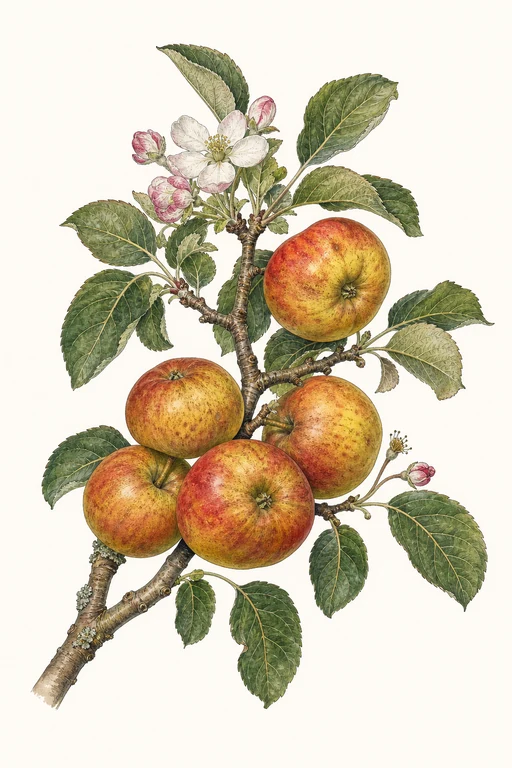
Ribston Pippin
Ribston Pippin greets the senses with a fragrant, honeyed perfume and a richly balanced bite—tart-lively at first, then mellowing into a sweet, lingering finish.
The flesh is fine-grained and crisp, with a classic pippin snap that holds its character from the first autumn harvest through late-season enjoyment. Ideal for fresh savoring and for turning into deeply flavored preserves, sauces, and spiced preparations that celebrate its aromatic complexity.
Light: Full SunMaturity: 365 DaysHabit: Shrub
Planting schedules and alerts are optimized for Columbus (Zone 6b).
Crop Dates
| Milestone | Date |
|---|---|
| Last Frost | Apr 25th |
| Growing Approach | Protected Environment Only |
Crop Details
| Trait | Value |
|---|---|
| Days to Maturity | 365 |
| Sun Requirements | Full Sun |
| Growth Habit | Shrub |
| Support Needed | None |
| Planting Depth | Normal |
| Germination Temp (°F) | 60 |
| Min Soil Temp (°F) | 50 |
| Min Night Temp (°F) | 25 |
| Harden Off (days) | Not Required |
Culinary Notes

Chef's Note
Ribston Pippin’s signature is that pippin snap—bright tartness at first contact, then a honeyed, perfumed swing that keeps cooking sauces tasting “apple-sweet” instead of flat. Use it when you want crisp texture and aromatic lift: it won’t turn mealy on the plate, and in preserves it perfumes the whole pot.

Best Uses
- thin slices for a crisp, tart-forward salad that stays snappy under vinaigrette
- chunked for spiced baking where the aromatics bloom (tarts, galettes)
- slow-cooked preserves or apple butter for a fragrant, amber-red set
- grated into quick slaws for a clean bite against creamy dressings

Flavor Profile

Frequently Asked Questions
What’s a common pest or disease problem for Malus domestica (Ribston Pippin) and how do I address it?
How often should I water Malus domestica during the main growing season?
How do I tell when Ribston Pippin apples (Malus domestica) are ready to harvest?
Sowing Tips

Transplant Conditions
Wait until soil reaches 50°F and nights stay above 25°F before moving outdoors.
Expert Note

Plant apple trees in full sun with well-drained soil and plan for cross-pollination (another compatible cultivar nearby) for best fruit set.