
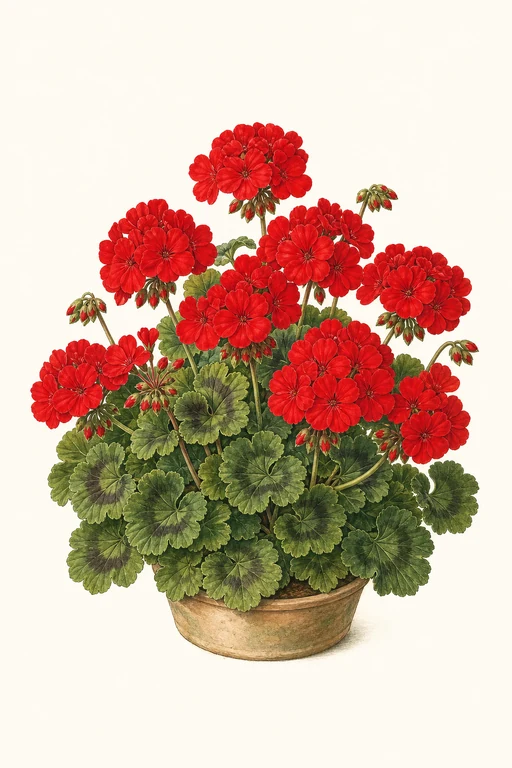
Ringo 2000 Scarlet Red
Velvety scarlet blooms ignite the garden from late spring into early fall, each flower carrying a rich, velour-like glow that looks almost lit from within.
Ringo 2000 Scarlet Red forms a tidy, mounding habit with sturdy stems and dependable, continuous flowering—ideal for filling containers, borders, and window boxes with lasting color. Grow it for its plush flower texture and bold, saturated presence that shines beautifully in mass plantings.
Light: Full SunMaturity: 70 DaysHabit: Upright
Crop Dates : 4a
| Milestone | Date |
|---|---|
| Start Indoors | Direct Sow |
| Last Frost | May 15th |
| Transplant / Sow Outdoors | May 15th |
| Harvest Begins | Jul 24th |
| Harvest Ends | Sep 24th |
Crop Details
| Trait | Value |
|---|---|
| Days to Maturity | 70 |
| Sun Requirements | Full Sun |
| Growth Habit | Upright |
| Support Needed | None |
| Planting Depth | Normal |
| Germination Temp (°F) | 70 |
| Min Soil Temp (°F) | 60 |
| Min Night Temp (°F) | 50 |
| Harden Off (days) | 7 |
Culinary Notes

Chef's Note
Even though it’s marked edible, Geranium (Pelargonium) is usually a light, perfumed edible-flower—think garnish, not produce. Use petals sparingly so that the velvety floral scent doesn’t overpower the plate.

Best Uses
- Use the petals sparingly as a high-impact garnish on plated desserts and cocktails
- Chop a few petals into a very small amount of honey or simple syrup for a subtle floral perfume
- Fold a few petals into lightly sweet whipped cream for immediate serving

Flavor Profile

Kitchen Pairings
Frequently Asked Questions
What pest or disease is most common on Pelargonium × hortorum (Ringo 2000 Scarlet Red), and how do I treat it?
How often should I water Pelargonium × hortorum during active growth, and what soil moisture level should I aim for?
How can I tell when Ringo 2000 Scarlet Red is ready to harvest?
Sowing Tips

Transplant Conditions
Wait until soil reaches 60°F and nights stay above 50°F before moving outdoors. Harden off for 7 days first.
Expert Note

Start geraniums under warm conditions and transplant only after nights are reliably mild, then keep soil evenly moist for nonstop bloom.