
Roderique
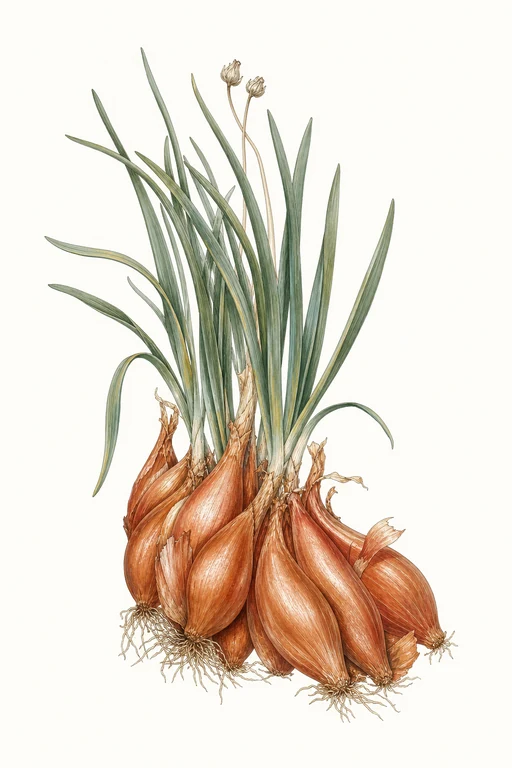
Roderique shallots bring a vivid, pungent perfume that blooms as soon as they’re opened—sharp yet elegantly sweet at the finish.
The bulbs form neat, elongated clusters with a smooth, burnished skin and a firm, fine-grained texture that holds its character beautifully for roasting and sautéing, as well as for bold sauces and quick pickling. Grow Roderique for a dependable 110-day season and a harvest that feels tailor-made for pantry staples and garden-to-jar flavor.
Light: Full SunMaturity: 110 DaysHabit: Bulbing
Planting schedules and alerts are optimized for Columbus (Zone 6b).
Crop Dates
| Milestone | Date |
|---|---|
| Start Indoors | Direct Sow |
| Last Frost | Apr 25th |
| Transplant / Sow Outdoors | Apr 18th |
| Harvest Begins | Aug 6th |
| Harvest Ends | Oct 16th |
Crop Details
| Trait | Value |
|---|---|
| Days to Maturity | 110 |
| Sun Requirements | Full Sun |
| Growth Habit | Bulbing |
| Support Needed | None |
| Planting Depth | Normal |
| Germination Temp (°F) | 60 |
| Min Soil Temp (°F) | 45 |
| Min Night Temp (°F) | 35 |
| Harden Off (days) | Not Required |
Culinary Notes

Chef's Note
Roderique’s sharper, bloom-at-the-slice pungency makes it a standout when you want shallot flavor that actually shows up—sauté it hot for a sweet-pepper finish or pickle it for a clean, snappy bite. Its firm, fine-grained interior holds together under roasting, so you get flavor without mushy texture in the pan.

Best Uses
- sauté or roast until deeply golden for a caramel-sweet, peppery edge
- quick pickling for crunchy, punchy acidity
- mash into bold pan sauces where it thickens and perfumes
- thin slicing for raw/near-raw use in sharp vinaigrettes

Flavor Profile

Kitchen Pairings
Frequently Asked Questions
What pest or disease commonly affects Allium cepa var. aggregatum (French Grey/Roderique) and how can I prevent it?
How often should I water Roderique during the main bulbing growth phase?
How do I tell when Roderique is ready to harvest?
Sowing Tips

Transplant Conditions
Wait until soil reaches 45°F and nights stay above 35°F before moving outdoors.
Expert Note

For mild, crispy shallots, plant sets shallow-to-normal depth, keep the soil evenly moist early, and stop watering once tops begin to yellow to firm the bulbs.