
Roselle
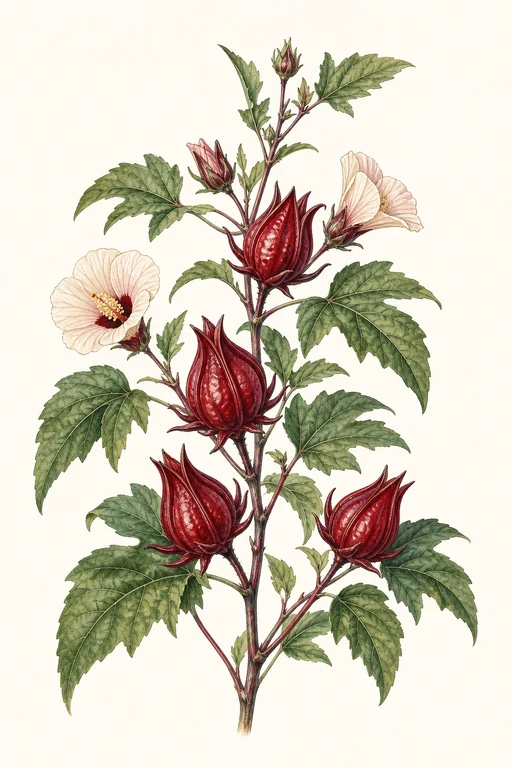
Tart-sweet roselle calyces unfurl into jewel-toned cups—deep garnet with a velvety, lightly puckered surface that feels almost velour-soft in the hand.
As the plants mature (about 120 days), the fleshy calyxes develop a bright, cranberry-like tang with a gentle floral lift, ideal for crafting refreshing herbal beverage infusions. Grow this tropical showpiece for its dramatic, fruiting calyx display and boldly flavored cupfuls that steep into ruby color and lively character.
Light: Full SunMaturity: 120 DaysHabit: Upright
Planting schedules and alerts are optimized for Columbus (Zone 6b).
Crop Dates
| Milestone | Date |
|---|---|
| Start Indoors | Mar 14th |
| Last Frost | Apr 25th |
| Transplant / Sow Outdoors | Jun 20th |
| Harvest Begins | Oct 18th |
| Harvest Ends | Oct 16th |
Crop Details
| Trait | Value |
|---|---|
| Days to Maturity | 120 |
| Sun Requirements | Full Sun |
| Growth Habit | Upright |
| Support Needed | Upright |
| Planting Depth | Normal |
| Germination Temp (°F) | 75 |
| Min Soil Temp (°F) | 65 |
| Min Night Temp (°F) | 55 |
| Harden Off (days) | 10 |
Culinary Notes

Chef's Note
Roselle’s calyxes steep fast and turn drinks jewel-red while carrying a clean, puckering cranberry bite with a soft floral backnote. Use it as your tart-sweet foundation—think ruby hibiscus energy drinks, not muted tea.

Best Uses
- cold or hot herbal infusions that steep into ruby tartness
- concentrated syrup for cocktails and desserts
- gelled roselle “jam” to spoon over yogurt or cheesecake
- tart garnish—use calyces for color and a quick, sharp tang

Flavor Profile

Kitchen Pairings
Frequently Asked Questions
What pest or disease most commonly affects Hibiscus sabdariffa (roselle), and how can I manage it?
How often should I water roselle during the main growing phase?
How do I know when Hibiscus sabdariffa (roselle) is ready to harvest?
Sowing Tips

Transplant Conditions
Wait until soil reaches 65°F and nights stay above 55°F before moving outdoors. Harden off for 10 days first.
Expert Note

Start warm indoors early, then transplant only after nights are consistently warm and soil is fully settled to reduce shock and promote calyx formation.