
Rossa di Treviso
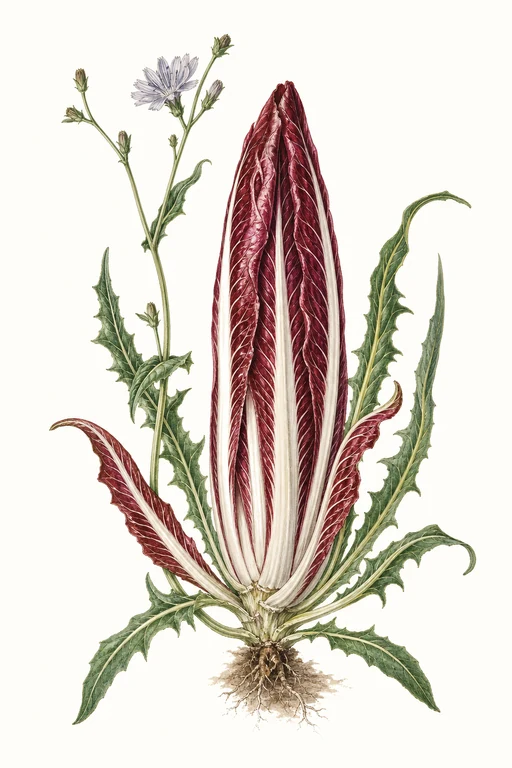
Silken, ruby-tinged hearts unfurl with a cool, bittersweet snap—Rossa di Treviso brings a vivid blush to the garden and a refined depth to the plate.
The heads mature in tall, tapered rosettes with crisp, tightly layered leaves that stay pleasantly crunchy, whether enjoyed fresh or gently warmed for a tender, savory finish. A signature choice for salads, roasted presentations, and elegant braises—its striking color and clean bitterness make every bite feel intentionally grown.
Light: Full SunMaturity: 70 DaysHabit: Rosette
Planting schedules and alerts are optimized for Columbus (Zone 6b).
Crop Dates
| Milestone | Date |
|---|---|
| Start Indoors | Direct Sow |
| Last Frost | Apr 25th |
| Transplant / Sow Outdoors | Apr 25th |
| Harvest Begins | Jul 4th |
| Harvest Ends | Oct 16th |
Crop Details
| Trait | Value |
|---|---|
| Days to Maturity | 70 |
| Sun Requirements | Full Sun |
| Growth Habit | Rosette |
| Support Needed | None |
| Planting Depth | Surface |
| Germination Temp (°F) | 70 |
| Min Soil Temp (°F) | 45 |
| Min Night Temp (°F) | 35 |
| Harden Off (days) | Not Required |
Culinary Notes

Chef's Note
Rossa di Treviso’s tightly layered hearts deliver a crisp, bittersweet snap that won’t turn soggy—so it’s a salad green that can handle real dressing. When you warm it just until the inner leaves go silky, the bitterness smooths into a savory, nutty finish that clings beautifully to fat and aged cheese.

Best Uses
- thin-sliced raw salad with bold vinaigrette so the leaves stay snappy
- hot-and-gentle braise until the inner layers go silky but don’t collapse
- roasted wedges at high heat for caramel edges around the bitterness
- pan-wilt with butter to round off the bite and coat the leaf

Flavor Profile

Kitchen Pairings
Frequently Asked Questions
What pest or disease most commonly affects Cichorium intybus (Rossa di Treviso), and how can I manage it?
How often should I water Rossa di Treviso during the main growing phase, and what soil moisture level should I aim for?
How do I tell when Rossa di Treviso (Cichorium intybus) is ready to harvest?
Sowing Tips

Transplant Conditions
Wait until soil reaches 45°F and nights stay above 35°F before moving outdoors.
Expert Note

For the sweetest, best-striped heads, keep soil evenly moist and avoid heat stress (bolting) by sowing for cool weather and using row cover if nights turn warm.