
Rouge d'Hiver
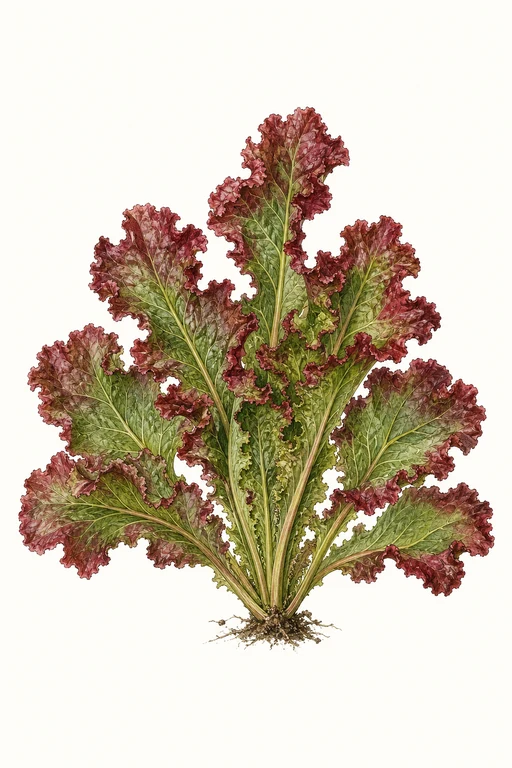
Velvety leaves unfurl in a cool-weather crescendo—Rouge d’Hiver brings a rich, wine-rose blush over crisp, tender green, with a softly sweet bite that feels fresh and clean.
The loose-leaf habit forms an airy rosette of finely textured foliage, offering a satisfying crunch that stays pleasantly crisp as it matures in about 55 days. Ideal for fresh salads and bright garnishes, Rouge d’Hiver also shines when wilted into quick, flavorful greens and stirred into hearty seasonal bowls.
Light: Part SunMaturity: 55 DaysHabit: Rosette
Crop Dates : 8a
| Milestone | Date |
|---|---|
| Start Indoors | Mar 4th |
| Last Frost | Apr 1st |
| Transplant / Sow Outdoors | Apr 1st |
| Harvest Begins | May 26th |
| Harvest Ends | Nov 5th |
Crop Details
| Trait | Value |
|---|---|
| Days to Maturity | 55 |
| Sun Requirements | Part Sun |
| Growth Habit | Rosette |
| Support Needed | None |
| Planting Depth | Surface |
| Germination Temp (°F) | 70 |
| Min Soil Temp (°F) | 40 |
| Min Night Temp (°F) | 30 |
| Harden Off (days) | 5 |
Culinary Notes

Chef's Note
Rouge d’Hiver is a loose-leaf lettuce with a sweet, clean crunch that holds up better than delicate butterheads when you toss and eat fast. Use it for cold-to-warm contrast—wilt it for seconds in a hot pan or pile it on top—so the velvety texture stays crisp instead of getting soggy.

Best Uses
- standalone salad greens that keep their snap under a light vinaigrette
- quick sauté or wilt—brief heat to tame the bite without turning wet
- layering as a garnish on warm grain bowls and beans for cold-to-hot contrast
- chopped, dressed leaves in sandwiches so they don’t ghost into mush

Flavor Profile

Kitchen Pairings
Frequently Asked Questions
What pest or disease most commonly affects Lactuca sativa (Rouge d’Hiver), and how do I treat it?
How often should I water Lactuca sativa during the main growing phase, and what soil moisture target should I aim for?
How can I tell when Rouge d’Hiver lettuce (Lactuca sativa) is ready to harvest?
Sowing Tips

Transplant Conditions
Wait until soil reaches 40°F and nights stay above 30°F before moving outdoors. Harden off for 5 days first.
Expert Note

For Rouge d’Hiver, aim to transplant into cool fall/late-season weather so the bronze leaves deepen to red as temperatures drop.