
Royal Chantenay
Sweet and richly aromatic, Royal Chantenay delivers a deep, carrot-orange harvest with a pleasantly crisp bite and fine-grained tenderness.
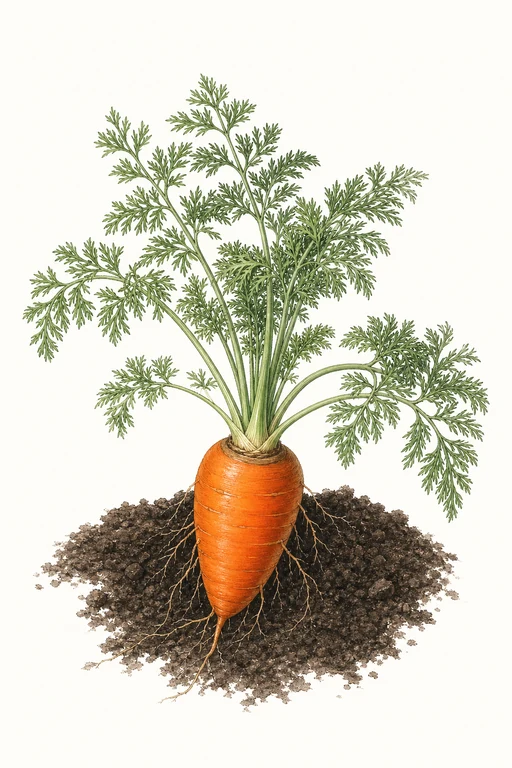
The roots are characteristically short and stout for the Chantenay class—ideal for roasting, fresh snacking, and vibrant mashes, while their naturally sweet flavor shines in glazed sides and pickled preparations. Garden to table in about 80 days, with a steady, dependable crop that rewards even small spaces with bold color and clean, uniform roots.
Light: Full SunMaturity: 80 DaysHabit: Taproot
Crop Dates : 2a
| Milestone | Date |
|---|---|
| Start Indoors | Direct Sow |
| Last Frost | May 25th |
| Transplant / Sow Outdoors | May 25th |
| Harvest Begins | Aug 13th |
| Harvest Ends | Aug 29th |
Crop Details
| Trait | Value |
|---|---|
| Days to Maturity | 80 |
| Sun Requirements | Full Sun |
| Growth Habit | Taproot |
| Support Needed | None |
| Planting Depth | Normal |
| Germination Temp (°F) | 70 |
| Min Soil Temp (°F) | 45 |
| Min Night Temp (°F) | 28 |
| Harden Off (days) | Not Required |
Culinary Notes

Chef's Note
Royal Chantenay’s short-stout build caramelizes quickly and stays sweet without turning woody, giving you a crisp exterior and tender interior in the same bite. It’s the kind of carrot that holds its own with butter-glaze and warm spices, rather than needing heavy sauce to taste like something.

Best Uses
- sheet-pan roasting with a glossy glaze—short stout roots caramelize fast without drying out
- fresh snacking sticks or shaved ribbons under a squeeze of citrus
- glazed side dishes (honey/butter or brown sugar) that cling to the root’s crisp surface
- mashes or purées where the texture stays silky instead of watery

Flavor Profile

Kitchen Pairings
Frequently Asked Questions
What pest or disease commonly affects Daucus carota (carrots) like Royal Chantenay, and how can I manage it?
How often should I water Royal Chantenay during the main growing phase to keep roots growing well?
How do I tell when Royal Chantenay is ready to harvest?
Sowing Tips

Transplant Conditions
Wait until soil reaches 45°F and nights stay above 28°F before moving outdoors.
Expert Note

Direct-sow in well-worked beds and keep the seed row consistently moist until germination to avoid forking and root cracking.