
Rubinette
Crisp as a cool autumn breeze, Rubinette brings a richly aromatic bite with a balanced sweetness and a bright, tangy lift.
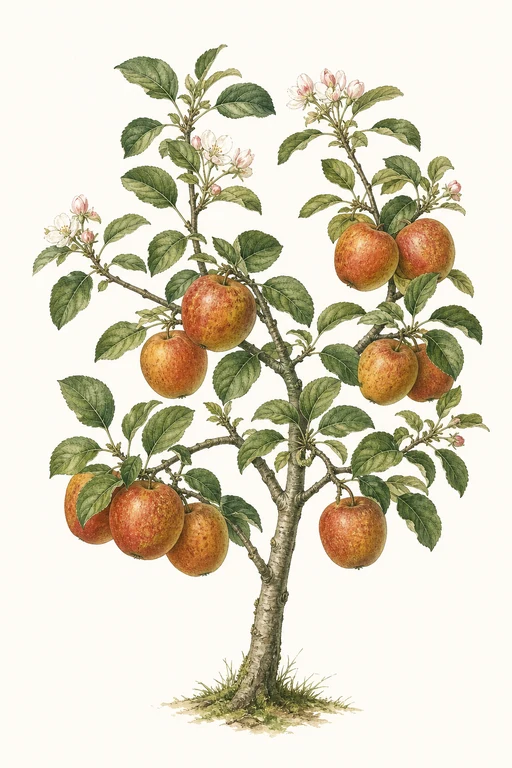
Its fruit is beautifully blushed—warm russet-red over a golden base—offering a firm, juicy texture that holds its character from hand to basket. Grow Rubinette for standout fresh eating and for beautifully fragrant preserves and cider-style uses where its classic apple perfume shines.
Light: Full SunMaturity: 150 DaysHabit: Shrub
Planting schedules and alerts are optimized for Columbus (Zone 6b).
Crop Dates
| Milestone | Date |
|---|---|
| Start Indoors | Direct Sow |
| Last Frost | Apr 25th |
| Transplant / Sow Outdoors | Apr 25th |
| Harvest Begins | Sep 22nd |
| Harvest Ends | Oct 16th |
Crop Details
| Trait | Value |
|---|---|
| Days to Maturity | 150 |
| Sun Requirements | Full Sun |
| Growth Habit | Shrub |
| Support Needed | None |
| Planting Depth | Normal |
| Germination Temp (°F) | 70 |
| Min Soil Temp (°F) | 40 |
| Min Night Temp (°F) | 28 |
| Harden Off (days) | Not Required |
Culinary Notes

Chef's Note
Rubinette’s firm, juicy bite is built for tasks where you need crunch and flavor to survive—warm it for pie or preserves and it won’t collapse into mush. Its perfume-forward tang makes it especially good for cider-style uses, where the aroma does the heavy lifting.

Best Uses
- snacking slices with sharp cheese—stays crunchy as it sits
- cider-style pressing or quick ferment for apple-forward aromatics
- preserves/jam where the perfume carries and the chunks hold shape
- pan-sauté or bake for pies where the fruit stays structured under heat

Flavor Profile

Frequently Asked Questions
What pest or disease most often affects Malus domestica (Jonagold-type apple) and what should I do?
How much should I water Malus domestica during the main growing season?
How can I tell when Rubinette (Malus domestica) is ready to harvest?
Sowing Tips

Transplant Conditions
Wait until soil reaches 40°F and nights stay above 28°F before moving outdoors.
Expert Note

For best flavor and consistent yields, plant in full sun with good air flow and plan on cross-pollination with a compatible apple cultivar.