
Sakurajima Giant
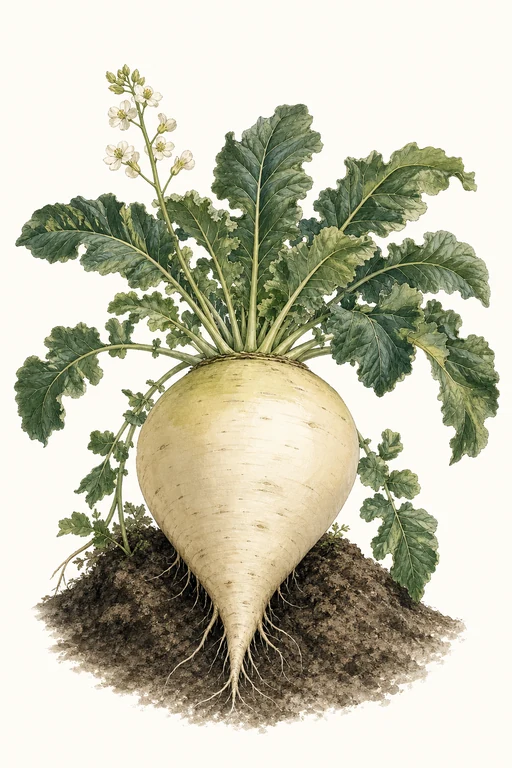
Sink your senses into the sheer presence of Sakurajima Giant daikon—an enormous, slow-maturing root with a clean, luminous bite and a subtly sweet, peppery edge.
The flesh stays crisp and juicy, with a fine, satiny texture that holds up beautifully for bold flavor-forward preparations, from fresh slices to hearty roasts and vibrant sauces. Grow it for the dramatic satisfaction of harvesting a true centerpiece root at about 75 days, then let its bright character shine in your favorite daikon-forward dishes.
Light: Full SunMaturity: 75 DaysHabit: Taproot
Planting schedules and alerts are optimized for Columbus (Zone 6b).
Crop Dates
| Milestone | Date |
|---|---|
| Start Indoors | Direct Sow |
| Last Frost | Apr 25th |
| Transplant / Sow Outdoors | Apr 25th |
| Harvest Begins | Jul 9th |
| Harvest Ends | Oct 16th |
Crop Details
| Trait | Value |
|---|---|
| Days to Maturity | 75 |
| Sun Requirements | Full Sun |
| Growth Habit | Taproot |
| Support Needed | None |
| Planting Depth | Normal |
| Germination Temp (°F) | 55 |
| Min Soil Temp (°F) | 40 |
| Min Night Temp (°F) | 28 |
| Harden Off (days) | Not Required |
Culinary Notes

Chef's Note
Sakurajima Giant daikon brings a bigger-than-life crunch with a bright, peppery snap that stays juicy even when cooked hot. It’s built for thick-cut preparations—slice it, pickle it, or roast it—because the flesh keeps that satiny bite instead of collapsing.

Best Uses
- super-thick slices shaved or cut into batons for quick pickles
- high-heat roast or braise where it turns tender without going mushy
- daikon-forward dipping sauce or quick simmered glaze
- raw matchsticks for crunchy, ice-cold contrast

Flavor Profile

Kitchen Pairings
Frequently Asked Questions
What’s a common problem for Raphanus sativus (Sakurajima giant radish) and how can I control it?
How often should I water Sakurajima giant radish during the main growing phase?
How do I know when Sakurajima giant radish is ready to harvest?
Sowing Tips

Transplant Conditions
Wait until soil reaches 40°F and nights stay above 28°F before moving outdoors.
Expert Note

Sow directly where it will grow long-term—water consistently and keep weeds down so the giant root forms straight and crisp.