
Sakurajima Mammoth
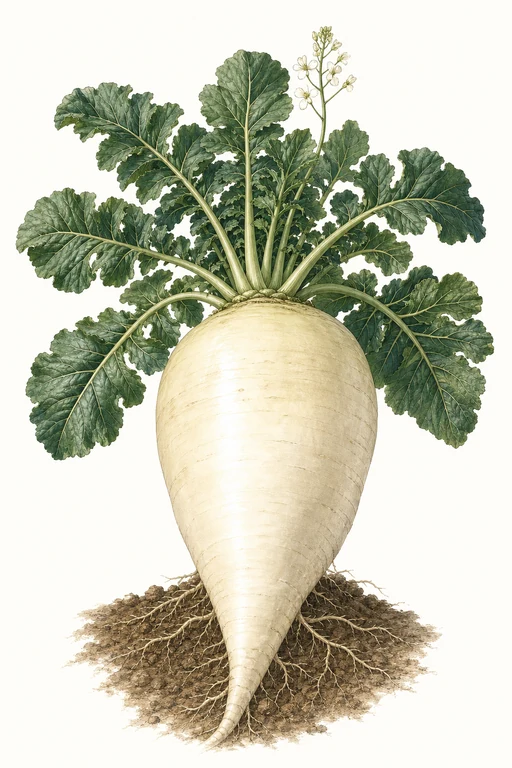
Astonishing in the garden, Sakurajima Mammoth daikon unfurls into a dramatic, oversized root with a clean, ivory glow and a crisp, juicy bite.
Its flavor is bright and gently sweet at maturity—less sharp than many daikons—while the texture stays firm and succulent, ideal for bold, fresh preparations and for soaking up savory sauces. Grow this showpiece for striking presence and versatile performance in salads, pickles, and hearty simmered dishes alike.
Light: Full SunMaturity: 70 DaysHabit: Taproot
Planting schedules and alerts are optimized for Columbus (Zone 6b).
Crop Dates
| Milestone | Date |
|---|---|
| Start Indoors | Direct Sow |
| Last Frost | Apr 25th |
| Transplant / Sow Outdoors | Apr 25th |
| Harvest Begins | Jul 4th |
| Harvest Ends | Oct 16th |
Crop Details
| Trait | Value |
|---|---|
| Days to Maturity | 70 |
| Sun Requirements | Full Sun |
| Growth Habit | Taproot |
| Support Needed | None |
| Planting Depth | Normal |
| Germination Temp (°F) | 45 |
| Min Soil Temp (°F) | 40 |
| Min Night Temp (°F) | 28 |
| Harden Off (days) | Not Required |
Culinary Notes

Chef's Note
This daikon’s size and maturity lean bright rather than harsh, so it stays sweet-tasting even when cut thick. It’s built for crisp salads and brining, but it also holds up in simmered dishes—its flesh softens at the edges while keeping a satisfying bite in the center.

Best Uses
- thick matchstick or baton slices for sharp-crunch slaws that can take heavy dressings
- quick pickle (rice vinegar or brine) where the firm interior stays snappy
- soak-and-simmer: shabu-style or braises where it turns silky at the edges without going fluffy
- grated daikon for punchy sauces and condiments that cling to fatty proteins

Flavor Profile

Kitchen Pairings
Frequently Asked Questions
What pest or disease commonly affects radish (Raphanus sativus) like Sakurajima Mammoth, and how can I prevent it?
How often should I water Sakurajima Mammoth radish during the main bulking period?
How do I know when Sakurajima Mammoth radish (Raphanus sativus) is ready to harvest?
Sowing Tips

Transplant Conditions
Wait until soil reaches 40°F and nights stay above 28°F before moving outdoors.
Expert Note

Plant daikon where it can grow uninterrupted (no transplanting), keep moisture even, and harvest before it bolts to preserve sweetness.