
Sakurajima
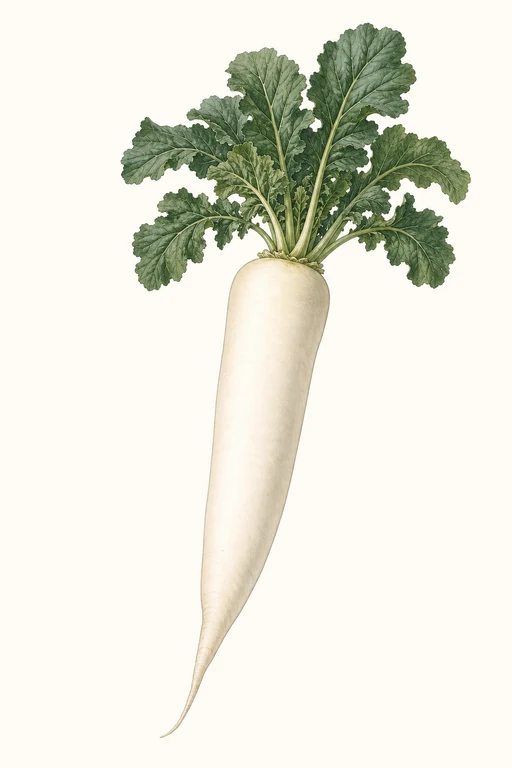
Sakurajima daikon arrives with a dramatic, show-stopping presence—its flesh is famously crisp and silky, carrying a clean, sweet-radish snap that turns mellow and fragrant when warmed.
Expect a long, smooth root with a pale ivory interior and a tender, fine-grained texture that holds its character from harvest to storage. Grow Sakurajima for bold daikon salads, quick pickles, and standout sauces where its gentle heat and refined crunch shine.
Light: Full SunMaturity: 70 DaysHabit: Rosette
Planting schedules and alerts are optimized for Columbus (Zone 6b).
Crop Dates
| Milestone | Date |
|---|---|
| Start Indoors | Direct Sow |
| Last Frost | Apr 25th |
| Transplant / Sow Outdoors | Apr 25th |
| Harvest Begins | Jul 4th |
| Harvest Ends | Oct 16th |
Crop Details
| Trait | Value |
|---|---|
| Days to Maturity | 70 |
| Sun Requirements | Full Sun |
| Growth Habit | Rosette |
| Support Needed | None |
| Planting Depth | Normal |
| Germination Temp (°F) | 50 |
| Min Soil Temp (°F) | 40 |
| Min Night Temp (°F) | 28 |
| Harden Off (days) | Not Required |
Culinary Notes

Chef's Note
Sakurajima daikon is built for contrast: razor-crisp raw slices give a clean, sweet snap, while quick warming mellows the bite into a fragrant, silky tenderness. Treat it like a centerpiece—pickle or shave it thin so it doesn’t lose its juicy crunch to the dressing.

Best Uses
- quick pickles that stay snappy and lightly spicy
- shaved raw salads where it holds a crisp, not watery, crunch
- warmed daikon—steam or briefly braise—then finish with vinegar for a mellow, aromatic effect
- daikon-forward sauces or broths where the sweetness carries through without tasting harsh

Flavor Profile

Kitchen Pairings
Frequently Asked Questions
What pest or disease commonly affects Raphanus sativus (Sakurajima radish), and what should I do?
How often should I water Sakurajima radish during active root growth?
How can I tell when my Sakurajima radish is ready to harvest?
Sowing Tips

Transplant Conditions
Wait until soil reaches 40°F and nights stay above 28°F before moving outdoors.
Expert Note

Sakurajima-type daikon needs deep, loose soil and consistent moisture—avoid transplanting and keep the seedbed weed-free until roots establish.