
Sante
Silky, mild shallot flavor arrives with a gentle sweetness and a clean, green-edged aroma—never harsh, always inviting.
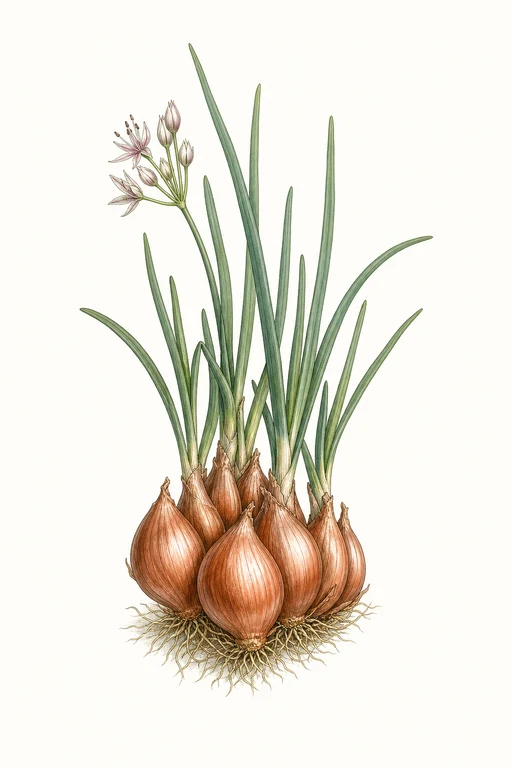
Sante forms tidy, well-filled bulbs with a tender, fine texture that stays pleasantly crisp when used fresh, and turns beautifully mellow when roasted or folded into sauces. A cool-season favorite for gardeners who want reliable harvests at about 90 days and a distinctive, garden-fresh allium character in every dish.
Light: Full SunMaturity: 90 DaysHabit: Bulbing
Planting schedules and alerts are optimized for Columbus (Zone 6b).
Crop Dates
| Milestone | Date |
|---|---|
| Start Indoors | Direct Sow |
| Last Frost | Apr 25th |
| Transplant / Sow Outdoors | Mar 28th |
| Harvest Begins | Jun 26th |
| Harvest Ends | Oct 16th |
Crop Details
| Trait | Value |
|---|---|
| Days to Maturity | 90 |
| Sun Requirements | Full Sun |
| Growth Habit | Bulbing |
| Support Needed | None |
| Planting Depth | Normal |
| Germination Temp (°F) | 60 |
| Min Soil Temp (°F) | 45 |
| Min Night Temp (°F) | 28 |
| Harden Off (days) | Not Required |
Culinary Notes

Chef's Note
Sante gives you that unmistakable shallot fragrance without the bite—great when you want allium character that stays elegant. Use it raw for a crisp, silky crunch, or roast to turn it sweet and spreadable for sauces and pan reductions.

Best Uses
- thin rings or fine dice in vinaigrettes and yogurt sauces where it stays crisp
- roast whole or in halves until jammy and caramel-mellow
- fold into pan sauces to perfume butter and stock without going sharp
- quick pickle for a bright, crisp allium snap

Flavor Profile

Frequently Asked Questions
What disease or pest commonly affects Allium oschaninii (French Grey shallot), and how can I manage it?
How often should I water Allium oschaninii during the main growing phase?
How do I know when to harvest Allium oschaninii?
Sowing Tips

Transplant Conditions
Wait until soil reaches 45°F and nights stay above 28°F before moving outdoors.
Expert Note

Plant shallot sets with the pointed end up so only the tip is exposed, and keep soil evenly moist until bulbing begins for best size and storage.