
Savoy King
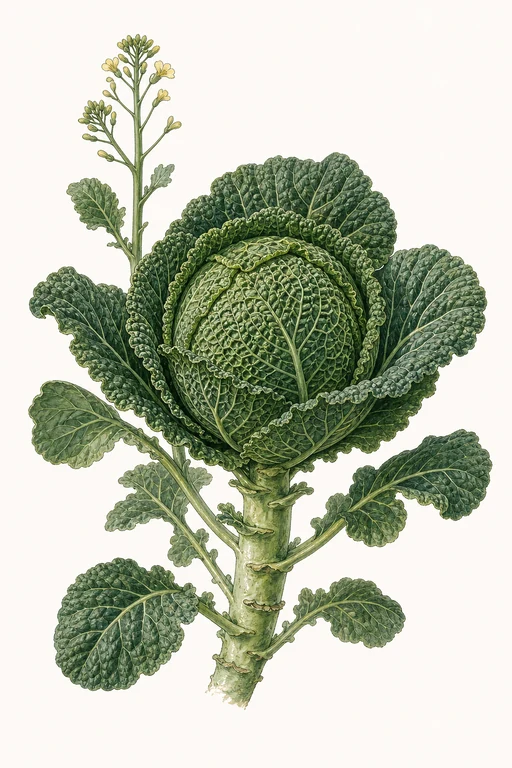
Crisp, deeply savoyed leaves unfurl into a dense, stately head with a cool, sea-green glow and a pleasantly sweet, cabbage-forward flavor.
Savoy King’s texture is tender-crisp with pronounced, crinkled ridges that hold their character through the season, making it a standout for hearty winter fare. Grow it for reliable, full-size heads at about 80 days—ideal for fresh salads, braises, and robust slaws that shine with its distinctive, ruffled bite.
Light: Full SunMaturity: 80 DaysHabit: Rosette
Location not set yet
Location not set yet
Enter your ZIP for local crop dates
Savoy King Planting Dates by USDA Zone
Estimated US hardiness-zone windows for sow, transplant, and harvest. Enter a US ZIP above for exact local dates, or open a zone below.
| Zone | Start Indoors | Sow / Transplant | Harvest |
|---|---|---|---|
| Zone 1a | Protected Environment Only | ||
| Zone 1b | Protected Environment Only | ||
| Zone 2a | Apr 27th | May 25th | Aug 13th – Aug 29th |
| Zone 2b | Apr 17th | May 15th | Aug 3rd – Aug 25th |
| Zone 3a | Apr 17th | May 15th | Aug 3rd – Sep 1st |
| Zone 3b | Apr 21st | May 19th | Aug 7th – Sep 21st |
| Zone 4a | Apr 17th | May 15th | Aug 3rd – Sep 24th |
| Zone 4b | Apr 15th | May 13th | Aug 1st – Sep 27th |
| Zone 5a | Apr 10th | May 8th | Jul 27th – Sep 30th |
| Zone 5b | Apr 6th | May 4th | Jul 23rd – Oct 5th |
| Zone 6a | Apr 3rd | May 1st | Jul 20th – Oct 10th |
| Zone 6b | Mar 28th | Apr 25th | Jul 14th – Oct 16th |
| Zone 7a | Mar 23rd | Apr 20th | Jul 9th – Oct 20th |
| Zone 7b | Mar 13th | Apr 10th | Jun 29th – Oct 28th |
| Zone 8a | Mar 4th | Apr 1st | Jun 20th – Nov 5th |
| Zone 8b | Feb 23rd | Mar 23rd | Jun 11th – Nov 12th |
| Zone 9a | Feb 6th | Mar 6th | May 25th – Nov 26th |
| Zone 9b | Jan 12th | Feb 9th | Apr 30th – Dec 9th |
| Zone 10a | — | Oct 1st | Dec 20th – Feb 28th |
| Zone 10b | — | Oct 1st | Dec 20th – Feb 28th |
| Zone 11a | — | Oct 1st | Dec 20th – Feb 28th |
| Zone 11b | — | Oct 1st | Dec 20th – Feb 28th |
| Zone 12a | — | Oct 1st | Dec 20th – Feb 28th |
| Zone 12b | — | Oct 1st | Dec 20th – Feb 28th |
| Zone 13a | — | Oct 1st | Dec 20th – Feb 28th |
| Zone 13b | — | Oct 1st | Dec 20th – Feb 28th |
Crop Details
| Trait | Value |
|---|---|
| Days to Maturity | 80 |
| Sun Requirements | Full Sun |
| Growth Habit | Rosette |
| Support Needed | None |
| Planting Depth | Normal |
| Germination Temp (°F) | 75 |
| Min Soil Temp (°F) | 45 |
| Min Night Temp (°F) | 32 |
| Harden Off (days) | 6 |
Culinary Notes

Chef's Note
Savoy King’s ridged, deeply crinkled leaves give you that satisfying snap on the first chew, then soften in a controlled way when heat hits. It’s built for braising and slaw work where you want cabbage flavor to stay vivid without getting watery or cabbage-mushy.

Best Uses
- shred for crunchy winter slaw that doesn’t turn to mush
- braise until the ridges go silky while the core stays pleasantly structured
- leaf-by-leaf sauté for a quick, glossy ragù-style skillet base
- soup duty: cabbage ribbons that hold their shape in brothy stews

Flavor Profile

Kitchen Pairings
Frequently Asked Questions
What pest or disease is most likely on Brassica oleracea var. capitata (Savoy-type cabbage), and how do I control it?
How often should I water Savoy-type cabbage during the main growing phase?
How can I tell when Savoy King cabbage is ready to harvest?
Sowing Tips

Transplant Conditions
Wait until soil reaches 45°F and nights stay above 32°F before moving outdoors. Harden off for 6 days first.
Expert Note

For best Savoy texture, aim for steady growth with cool conditions and avoid letting seedlings get rootbound before transplanting.