
Scarlet Fall
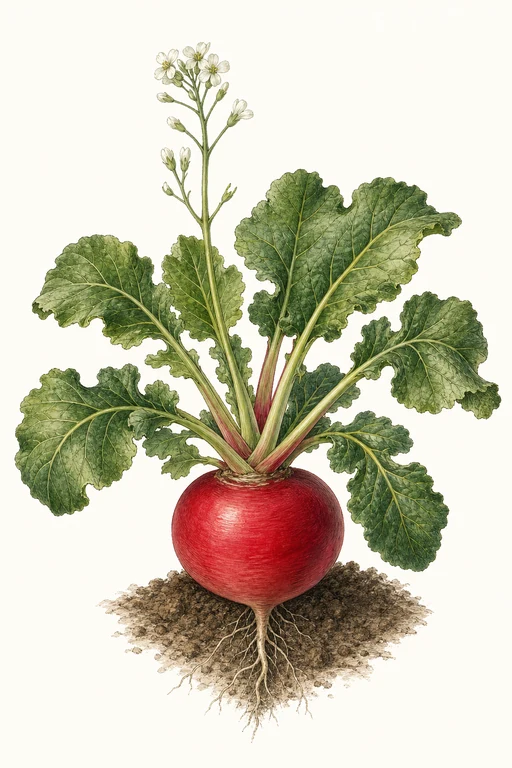
Sink your senses into Scarlet Fall’s dramatic, watermelon-radish beauty—crisp flesh that bursts with a vivid, jewel-toned contrast and a clean, peppery snap.
The roots mature to an impressive size with a smooth, glossy exterior in rich scarlet, transitioning to a softly blushed interior that stays pleasantly firm and juicy. Grow it for standout fresh slices, bold roasts, and striking garnishes—its color makes every platter feel like a seasonal celebration.
Light: Full SunMaturity: 65 DaysHabit: Taproot
Location not set yet
Location not set yet
Enter your ZIP for local crop dates
Scarlet Fall Planting Dates by USDA Zone
Estimated US hardiness-zone windows for sow, transplant, and harvest. Enter a US ZIP above for exact local dates, or open a zone below.
| Zone | Start Indoors | Sow / Transplant | Harvest |
|---|---|---|---|
| Zone 1a | Protected Environment Only | ||
| Zone 1b | Protected Environment Only | ||
| Zone 2a | Direct Sow | May 25th | Jul 29th – Aug 29th |
| Zone 2b | Direct Sow | May 15th | Jul 19th – Aug 25th |
| Zone 3a | Direct Sow | May 15th | Jul 19th – Sep 1st |
| Zone 3b | Direct Sow | May 19th | Jul 23rd – Sep 21st |
| Zone 4a | Direct Sow | May 15th | Jul 19th – Sep 24th |
| Zone 4b | Direct Sow | May 13th | Jul 17th – Sep 27th |
| Zone 5a | Direct Sow | May 8th | Jul 12th – Sep 30th |
| Zone 5b | Direct Sow | May 4th | Jul 8th – Oct 5th |
| Zone 6a | Direct Sow | May 1st | Jul 5th – Oct 10th |
| Zone 6b | Direct Sow | Apr 25th | Jun 29th – Oct 16th |
| Zone 7a | Direct Sow | Apr 20th | Jun 24th – Oct 20th |
| Zone 7b | Direct Sow | Apr 10th | Jun 14th – Oct 28th |
| Zone 8a | Direct Sow | Apr 1st | Jun 5th – Nov 5th |
| Zone 8b | Direct Sow | Mar 23rd | May 27th – Nov 12th |
| Zone 9a | Direct Sow | Mar 6th | May 10th – Nov 26th |
| Zone 9b | Direct Sow | Feb 9th | Apr 15th – Dec 9th |
| Zone 10a | — | Oct 1st | Dec 5th – Feb 28th |
| Zone 10b | — | Oct 1st | Dec 5th – Feb 28th |
| Zone 11a | — | Oct 1st | Dec 5th – Feb 28th |
| Zone 11b | — | Oct 1st | Dec 5th – Feb 28th |
| Zone 12a | — | Oct 1st | Dec 5th – Feb 28th |
| Zone 12b | — | Oct 1st | Dec 5th – Feb 28th |
| Zone 13a | — | Oct 1st | Dec 5th – Feb 28th |
| Zone 13b | — | Oct 1st | Dec 5th – Feb 28th |
Crop Details
| Trait | Value |
|---|---|
| Days to Maturity | 65 |
| Sun Requirements | Full Sun |
| Growth Habit | Taproot |
| Support Needed | None |
| Planting Depth | Normal |
| Germination Temp (°F) | 55 |
| Min Soil Temp (°F) | 40 |
| Min Night Temp (°F) | 28 |
| Harden Off (days) | Not Required |
Culinary Notes

Chef's Note
Scarlet Fall is a watermelon-radish type that slices like candy—crisp, juicy, and aggressively peppery at first bite, then mellowing into a sweet, cool finish. Use it where crunch matters (shaved or pickled) or heat just enough to lacquer the outside without turning the interior mealy.

Best Uses
- thin shaved ribbons for crunchy tartines and salads
- quick pickles/brines where the color holds and the bite stays lively
- roasting or pan-searing for caramelized edges while keeping the interior snappy
- showy garnishes: batons and half-moons on hot bowls or steak plates

Flavor Profile

Kitchen Pairings
Frequently Asked Questions
What’s the most common disease or pest on Raphanus sativus (watermelon radish type), and how do I fix it fast?
How often should I water Raphanus sativus during the main growing phase?
How can I tell when my Raphanus sativus is ready to harvest (around 65 days)?
Sowing Tips

Transplant Conditions
Wait until soil reaches 40°F and nights stay above 28°F before moving outdoors.
Expert Note

For fall success, keep soil evenly moist and harvest before roots become woody as days length shortens.