
Seminole Pumpkin
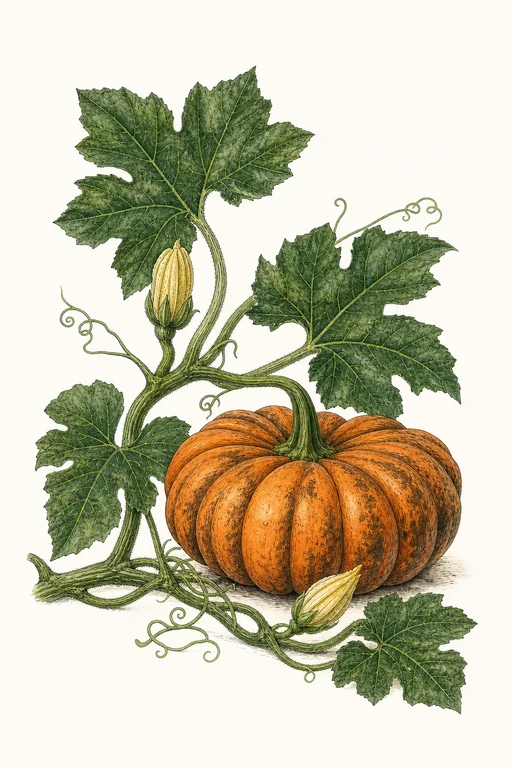
Sink your senses into Seminole Pumpkin’s rich, sun-warmed presence—its thick, deeply ribbed skin ripens to a burnished, warm orange with subtle, darker mottling that looks almost hand-painted.
The flesh is dense and velvety, sweet and aromatic, with a fine-grained texture that holds its character beautifully through long storage. Grow Seminole Pumpkin for hearty winter squash glory: roasting whole or in wedges, turning into smooth purées for pies and custards, and simmering into savory sauces and stews.
Light: Full SunMaturity: 95 DaysHabit: Vine
Crop Dates : 2a
| Milestone | Date |
|---|---|
| Start Indoors | Direct Sow |
| Last Frost | May 25th |
| Transplant / Sow Outdoors | Jun 8th |
| Harvest Begins | Sep 11th |
| Harvest Ends | Aug 29th |
Crop Details
| Trait | Value |
|---|---|
| Days to Maturity | 95 |
| Sun Requirements | Full Sun |
| Growth Habit | Vine |
| Support Needed | Trellis |
| Planting Depth | Normal |
| Germination Temp (°F) | 70 |
| Min Soil Temp (°F) | 65 |
| Min Night Temp (°F) | 55 |
| Harden Off (days) | 10 |
Culinary Notes

Chef's Note
Seminole Pumpkin’s dense, fine-grained flesh roasts into caramelized edges and mashes into a purée that stays smooth even after cooling—ideal for pies, custards, and thick soups. It plays especially well with butter and sage, where the sweetness reads nutty instead of sugary.

Best Uses
- roast wedges until deeply caramelized, then mash for a silky purée
- pumpkin purée for custardy pie and dense cheesecake-style fillings
- slow-simmer for thick, spoon-coating squash soups and ragù-like stews
- pan-roast cubes and toss with browned butter and sage for a tight, not-watery side

Flavor Profile

Frequently Asked Questions
What’s a common pest or disease for Cucurbita moschata (Seminole pumpkin), and how can I control it?
How often should I water Seminole pumpkin during the main growing phase, and what soil moisture level should I aim for?
How do I tell when Seminole pumpkin (Cucurbita moschata) is ready to harvest?
Sowing Tips

Transplant Conditions
Wait until soil reaches 65°F and nights stay above 55°F before moving outdoors. Harden off for 10 days first.

Direct Sow Preferred
Sensitive roots — does not transplant well. If starting indoors, use biodegradable pots and disturb roots as little as possible when moving outdoors.
Expert Note

For Seminole squash, wait until soil is warm and nights are reliably mild, then transplant only with minimal root disturbance (or direct-sow) for best survival.