
Shallot Zebrune
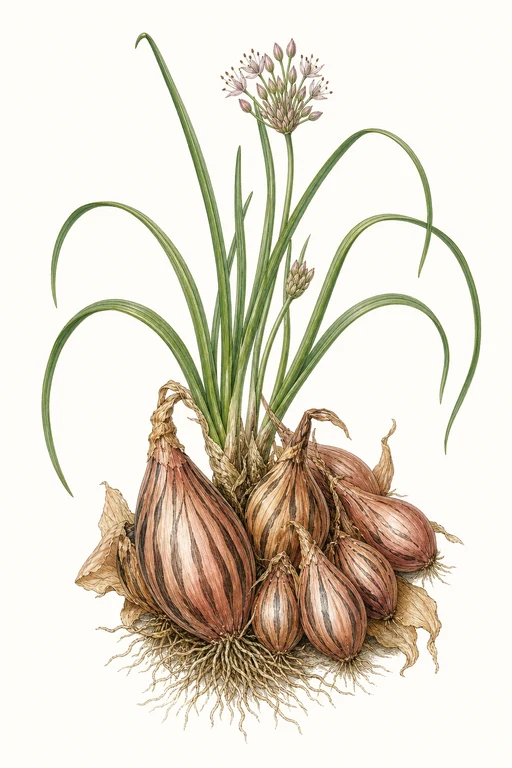
Aromatic and richly savory, Shallot Zebrune forms elegant, zebra-striped bulbs that bring a bright, oniony depth with a gentle sweetness.
The cloves are tender and finely textured—ideal for turning into silky, flavorful sauces and for roasting until mellow and fragrant, or for fresh, crisp use when you want a clean allium bite. Grow it for its distinctive look in the pantry and its dependable, garden-to-table performance over a full 120-day season.
Light: Full SunMaturity: 120 DaysHabit: Bulbing
Planting schedules and alerts are optimized for Columbus (Zone 6b).
Crop Dates
| Milestone | Date |
|---|---|
| Start Indoors | Mar 14th |
| Last Frost | Apr 25th |
| Transplant / Sow Outdoors | Apr 18th |
| Harvest Begins | Aug 16th |
| Harvest Ends | Oct 16th |
Crop Details
| Trait | Value |
|---|---|
| Days to Maturity | 120 |
| Sun Requirements | Full Sun |
| Growth Habit | Bulbing |
| Support Needed | None |
| Planting Depth | Normal |
| Germination Temp (°F) | 70 |
| Min Soil Temp (°F) | 45 |
| Min Night Temp (°F) | 28 |
| Harden Off (days) | 7 |
Culinary Notes

Chef's Note
Shallot Zebrune delivers that classic allium bite with a sweeter, cleaner finish—so it doesn’t turn harsh when you cook it down. Use it for reductions and roasted spreads where those zebra-striped bulbs go soft and turn silky, coating food instead of just seasoning it.

Best Uses
- slow-cooked shallot reduction for glossy pan sauce
- roasting whole bulbs/cloves until soft and caramel-mellow for spreading
- finely chopped fresh shallot for vinaigrettes and warm-but-not-boiling dressings
- quick sauté as the flavor base for butter, cream, or wine-driven sauces

Flavor Profile

Kitchen Pairings
Frequently Asked Questions
What pest or disease most often affects shallots (Allium cepa var. aggregatum), and what should I do?
How often should I water shallots during the main growing phase to get good bulbs?
How do I tell when Shallot Zebrune is ready to harvest?
Sowing Tips

Transplant Conditions
Wait until soil reaches 45°F and nights stay above 28°F before moving outdoors. Harden off for 7 days first.
Expert Note

Start echalion shallots early indoors, then transplant into cool but workable soil so they establish before bulbing.