
Shintokiwa
Crisp as a cool morning breeze, Shintokiwa Asian cucumber brings a clean, bright snap with a subtly sweet, refreshing flavor and a tender, thin skin that stays delightfully smooth.
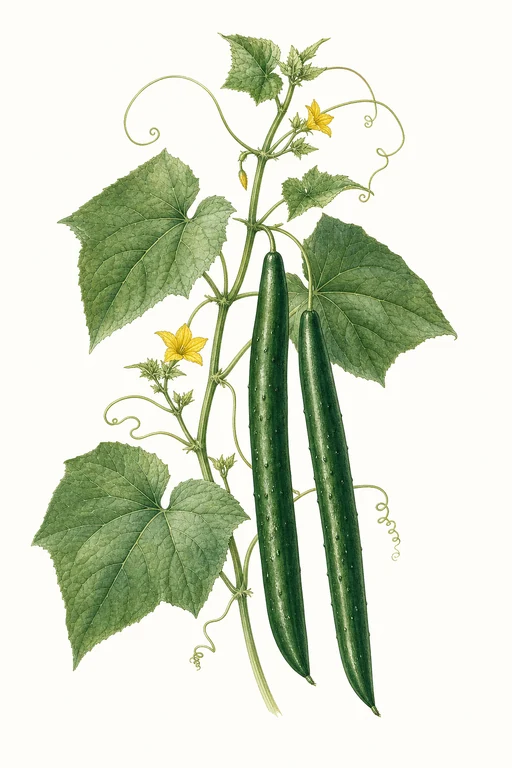
At maturity it forms straight, slender fruits with a refined, dark-green sheen—ideal for fresh slicing and for vibrant, quick-turn preparations where its crunch truly shines. Grow Shintokiwa for a steady harvest rhythm and a garden-to-plate experience defined by crisp texture and pure cucumber character.
Light: Full SunMaturity: 55 DaysHabit: Vine
Crop Dates : 6a
| Milestone | Date |
|---|---|
| Start Indoors | May 1st |
| Last Frost | May 1st |
| Transplant / Sow Outdoors | May 15th |
| Harvest Begins | Jul 9th |
| Harvest Ends | Oct 10th |
Crop Details
| Trait | Value |
|---|---|
| Days to Maturity | 55 |
| Sun Requirements | Full Sun |
| Growth Habit | Vine |
| Support Needed | Trellis |
| Planting Depth | Normal |
| Germination Temp (°F) | 70 |
| Min Soil Temp (°F) | 65 |
| Min Night Temp (°F) | 55 |
| Harden Off (days) | 10 |
Culinary Notes

Chef's Note
Shintokiwa’s thin, tender skin and lightning-brisk crunch make it a cucumber you use for bite-first eating—no peeling, no softening, just crisp slices that stay crisp under quick acid. It’s especially good when you want cucumber to taste like cucumber, with vinegar/ginger/chili doing the supporting work rather than overpowering it.

Best Uses
- thin fresh slicing on toast or alongside cured fish
- quick cucumber pickles where the skin stays pleasantly smooth
- cold, crunchy salad with minimal dressing so it doesn’t go watery
- tossed at the end of stir-fries for a brief, crisp blanch

Flavor Profile

Kitchen Pairings
Frequently Asked Questions
What pest or disease issue is most common on Cucumis sativus (cucumber), and how do I manage it?
How often should I water Cucumis sativus during the main growing phase?
How can I tell when Shintokiwa cucumbers are ready to harvest?
Sowing Tips

Transplant Conditions
Wait until soil reaches 65°F and nights stay above 55°F before moving outdoors. Harden off for 10 days first.

Direct Sow Preferred
Sensitive roots — does not transplant well. If starting indoors, use biodegradable pots and disturb roots as little as possible when moving outdoors.
Expert Note

For the crispest, best-tasting fruit, transplant only when soil is reliably warm and keep even moisture to prevent bitterness and hollowing.