
Silver Rose
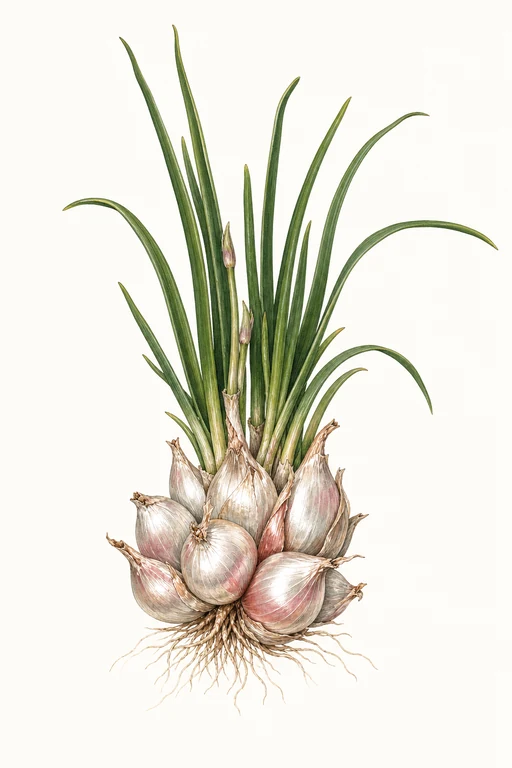
Silvery skins glow like moonlit parchment, peeling back to reveal a crisp, ivory interior that stays sweet and mellow.
“Silver Rose” shallots form well-balanced bulbs with a refined, rose-like cluster shape and a firm, fine-grained texture that shines when roasted until tender or stirred into sauces for a silky, aromatic depth. Grow this 170-day favorite for elegant, long-keeping bulbs that bring a gentle allium sweetness to every harvest basket.
Light: Full SunMaturity: 170 DaysHabit: Bulbing
Planting schedules and alerts are optimized for Columbus (Zone 6b).
Crop Dates
| Milestone | Date |
|---|---|
| Start Indoors | Direct Sow |
| Last Frost | Apr 25th |
| Transplant / Sow Outdoors | Apr 25th |
| Harvest Begins | Oct 12th |
| Harvest Ends | Oct 16th |
Crop Details
| Trait | Value |
|---|---|
| Days to Maturity | 170 |
| Sun Requirements | Full Sun |
| Growth Habit | Bulbing |
| Support Needed | None |
| Planting Depth | Normal |
| Germination Temp (°F) | 55 |
| Min Soil Temp (°F) | 45 |
| Min Night Temp (°F) | 28 |
| Harden Off (days) | Not Required |
Culinary Notes

Chef's Note
“Silver Rose” shallots lean sweet and controlled—heat softens their fine-grained texture into something almost custardy, ideal when you want onion flavor without the sting. Use them where the sauce or roast can hold their mellow aromatics, not overpower them.

Best Uses
- slow-cook or confit with butter until fully tender for a silky spreadable base
- roast or caramelize for sweet, jammy edges and a creamy center
- finely mince for quick pan sauces where you want aroma without aggressive bite
- pickle thin slices for a crisp, lightly sweet allium crunch

Flavor Profile

Kitchen Pairings
Frequently Asked Questions
What pest or disease commonly affects Allium cepa var. aggregatum (silver rose pearl onions), and how do I treat it?
How often should I water pearl onions (Allium cepa var. aggregatum) during the main growing phase?
How can I tell when silver rose pearl onions are ready to harvest (Allium cepa var. aggregatum)?
Sowing Tips

Transplant Conditions
Wait until soil reaches 45°F and nights stay above 28°F before moving outdoors.
Expert Note

Plant softneck garlic cloves in fall so they root before winter, then stop watering/irrigate only lightly once tops dry down near harvest for longest storage.