
Sora
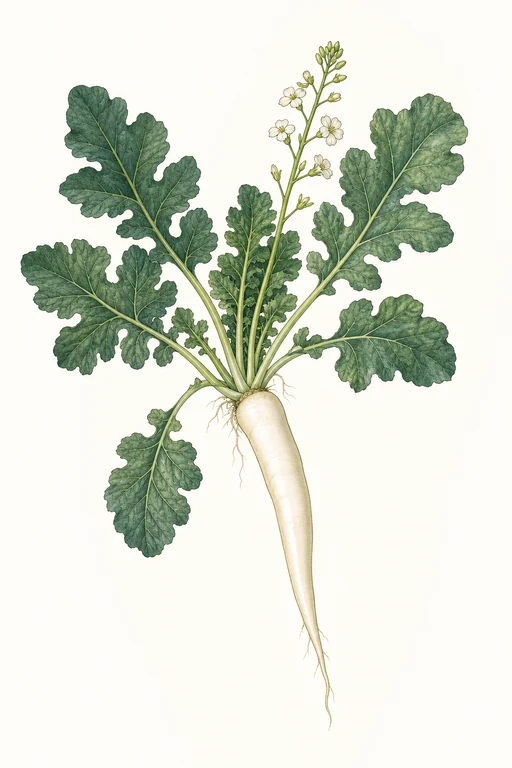
Sora daikon radish unfurls into a long, elegant root with a clean, luminous white glow and a crisp, juicy bite that stays tender even as it matures.
Its flavor is bright and gently pungent—sweetly refreshing at first, then pleasantly warming—making it a standout for bold fresh preparations and quick pickling. Grow Sora for a satisfying harvest of crisp roots that shine in salads, slaws, and tangy preserves, with the added delight of roasting-ready sweetness when you want deeper caramel notes.
Light: Full SunMaturity: 60 DaysHabit: Taproot
Planting schedules and alerts are optimized for Columbus (Zone 6b).
Crop Dates
| Milestone | Date |
|---|---|
| Start Indoors | Direct Sow |
| Last Frost | Apr 25th |
| Transplant / Sow Outdoors | Apr 25th |
| Harvest Begins | Jun 24th |
| Harvest Ends | Oct 16th |
Crop Details
| Trait | Value |
|---|---|
| Days to Maturity | 60 |
| Sun Requirements | Full Sun |
| Growth Habit | Taproot |
| Support Needed | None |
| Planting Depth | Normal |
| Germination Temp (°F) | 50 |
| Min Soil Temp (°F) | 40 |
| Min Night Temp (°F) | 28 |
| Harden Off (days) | Not Required |
Culinary Notes

Chef's Note
Sora daikon brings a crisp, juicy bite that stays tender as it matures, so it works in cold preps without going watery. Its bright, gently pungent flavor is tailor-made for vinegar tang and ginger heat, and roasting gives it caramel-leaning sweetness instead of collapsing into funk.

Best Uses
- paper-thin slaws where it stays snappy under citrus dressing
- quick pickles (vinegar + sugar) that keep a fresh, warming bite
- grated raw in crunchy salads or atop dumplings for a cooling lift
- roasting/air-frying to coax caramel edges without mushiness

Flavor Profile

Kitchen Pairings
Frequently Asked Questions
What pest or disease is most likely on Raphanus sativus (radish) and how do I control it?
How often should I water Raphanus sativus during the main growing phase?
How can I tell when Raphanus sativus is ready to harvest?
Sowing Tips

Transplant Conditions
Wait until soil reaches 40°F and nights stay above 28°F before moving outdoors.
Expert Note

Sow daikon directly in loose, stone-free soil and keep evenly moist so roots form smoothly without cracking.