
Speckled Swan
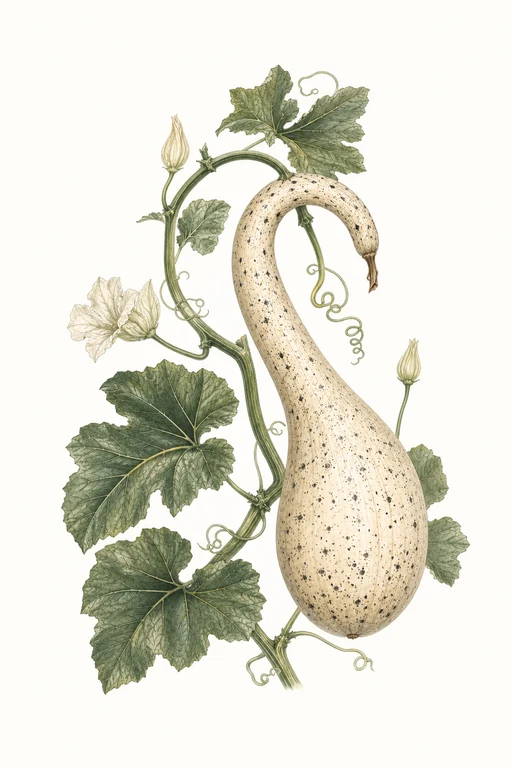
A graceful, swan-neck silhouette with a whisper of speckling—Speckled Swan gourds ripen to a handsome, mottled skin that feels firm and velvety to the touch.
The flesh is creamy and gently sweet, with a smooth, custard-like texture that holds its shape beautifully for hearty winter preparations. Grow this warm-season showpiece for a long season of harvest-ready gourds and a pantry-worthy centerpiece you’ll be proud to grow.
Light: Full SunMaturity: 100 DaysHabit: Vine
Planting schedules and alerts are optimized for Columbus (Zone 6b).
Crop Dates
| Milestone | Date |
|---|---|
| Start Indoors | May 2nd |
| Last Frost | Apr 25th |
| Transplant / Sow Outdoors | May 16th |
| Harvest Begins | Aug 24th |
| Harvest Ends | Oct 16th |
Crop Details
| Trait | Value |
|---|---|
| Days to Maturity | 100 |
| Sun Requirements | Full Sun |
| Growth Habit | Vine |
| Support Needed | Trellis |
| Planting Depth | Normal |
| Germination Temp (°F) | 70 |
| Min Soil Temp (°F) | 70 |
| Min Night Temp (°F) | 55 |
| Harden Off (days) | 12 |
Culinary Notes

Chef's Note
Speckled Swan’s creamy, custard-textured flesh is built for heat—roasting drives a toasty edge while the interior stays velvety and cohesive. Go sweet-savory with brown butter and sage, or lean into gentle baking/custard techniques where it can keep its shape rather than collapse into mash.

Best Uses
- roasted cubes for caramelized edges and creamy centers
- thick purée or soup base that stays silky without turning gluey
- baked custard-style gratins where the flesh keeps its structure
- pan-seared slices that caramelize on the outside and stay tender inside

Flavor Profile

Frequently Asked Questions
What are common pests or diseases for Lagenaria siceraria (Speckled Swan), and how can I manage them?
How often should I water Speckled Swan during the main growing phase?
How do I tell when Speckled Swan gourds are ready to harvest?
Sowing Tips

Transplant Conditions
Wait until soil reaches 70°F and nights stay above 55°F before moving outdoors. Harden off for 12 days first.

Direct Sow Preferred
Sensitive roots — does not transplant well. If starting indoors, use biodegradable pots and disturb roots as little as possible when moving outdoors.
Expert Note

Soak seeds 8–12 hours, warm the soil well before transplanting, and give ample space—bottle/gourd necks form best with steady moisture once vines establish.