
Stokes Purple
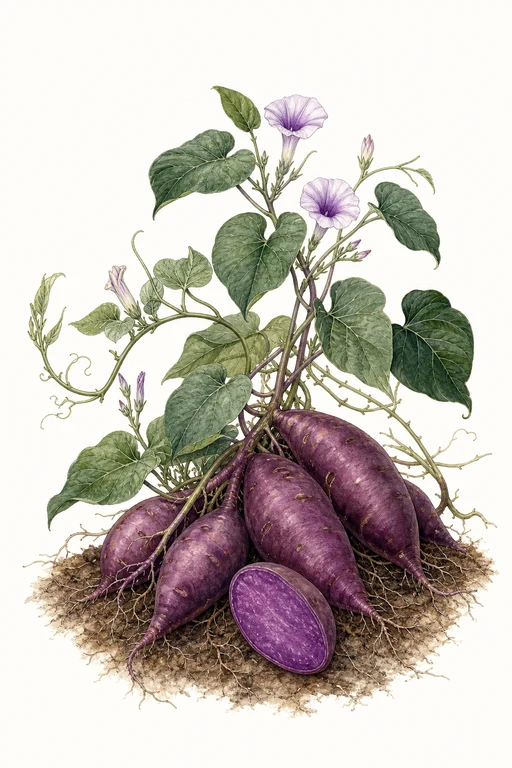
Velvety, inky purple flesh with a bright, almost jewel-toned glow is the signature of Stokes Purple—an heirloom-minded vine that rewards patience with roots that feel richly dense and beautifully smooth.
When grown to maturity, the tubers develop a deep purple exterior and a striking purple interior, delivering a sweet, earthy flavor profile prized for roasting and for show-stopping color in mashes, purées, and vibrant sauces. Plant Stokes Purple for a season-long harvest of dramatic color and satisfying texture that turns everyday dishes into a garden centerpiece.
Light: Full SunMaturity: 110 DaysHabit: Vine
Planting schedules and alerts are optimized for Columbus (Zone 6b).
Crop Dates
| Milestone | Date |
|---|---|
| Start Indoors | Direct Sow |
| Last Frost | Apr 25th |
| Transplant / Sow Outdoors | Apr 25th |
| Harvest Begins | Aug 13th |
| Harvest Ends | Oct 16th |
Crop Details
| Trait | Value |
|---|---|
| Days to Maturity | 110 |
| Sun Requirements | Full Sun |
| Growth Habit | Vine |
| Support Needed | None |
| Planting Depth | Normal |
| Germination Temp (°F) | 75 |
| Min Soil Temp (°F) | 70 |
| Min Night Temp (°F) | 55 |
| Harden Off (days) | Not Required |
Culinary Notes

Chef's Note
Stokes Purple cooks up with a dense, creamy mouthfeel that doesn’t turn watery, and its color stays gorgeous when you purée it and reduce it slightly. Roast first for caramel edges, then lean on fat plus a bright hit of citrus to make the sweetness snap.

Best Uses
- roasted wedges or batons, finished with flaky salt and a little acid
- silky mash or purée—no lumps, holds color under butter/cream
- vibrant sauces (purée-thickened) where you want purple to stay vivid
- gnocchi-style mash dough or dumplings for a dramatic, starchy chew

Flavor Profile

Kitchen Pairings
Frequently Asked Questions
What pest or disease commonly affects Ipomoea batatas (sweet potato), and how can I manage it?
How often should I water Ipomoea batatas during the main growing phase?
How do I know when Ipomoea batatas ‘Stokes Purple’ is ready to harvest?
Sowing Tips

Transplant Conditions
Wait until soil reaches 70°F and nights stay above 55°F before moving outdoors.
Expert Note

Use slips (grown from stored roots or sprouted slips) and transplant only after soils are warm (sweet potatoes hate cold) and nights stay reliably warm.