
Sunrise Bumble Bee
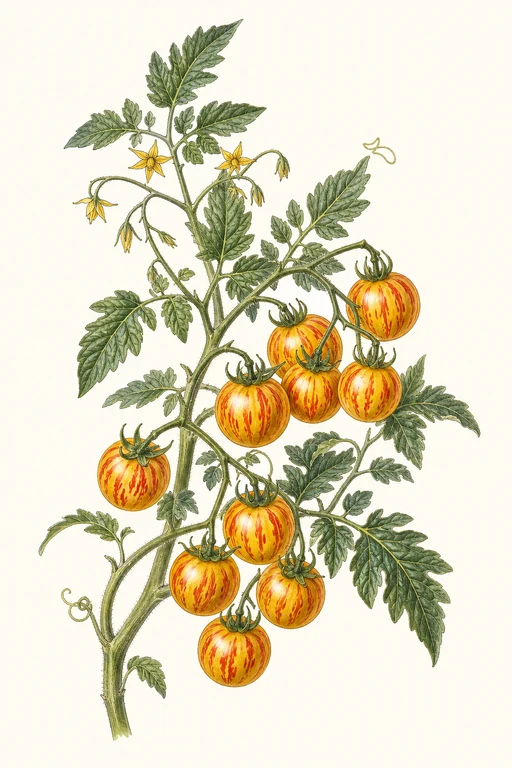
Sunrise Bumble Bee tomatoes burst with a honeyed, sunlit sweetness—bright, candy-like flavor that tastes vivid even at first bite.
At maturity, clusters of petite fruits wear a warm golden base brushed with bold red-orange striping, their skins taut and glossy with a crisp snap and juicy, seed-studded tenderness. Ideal for fresh snacking, vibrant salads, and quick, color-forward sauces that showcase their striped “bee” pattern.
Light: Full SunMaturity: 60 DaysHabit: Indeterminate
Crop Dates : 11a
| Milestone | Date |
|---|---|
| Climate | Frost-Free Climate |
| Growing Approach | Continuous Production |
Crop Details
| Trait | Value |
|---|---|
| Days to Maturity | 60 |
| Sun Requirements | Full Sun |
| Growth Habit | Indeterminate |
| Support Needed | Stake |
| Planting Depth | Deep |
| Germination Temp (°F) | 75 |
| Min Soil Temp (°F) | 60 |
| Min Night Temp (°F) | 50 |
| Harden Off (days) | 10 |
Culinary Notes

Chef's Note
These striped cherry tomatoes are built for speed: blister them briefly or keep them raw so their honeyed sweetness and glossy snap come through instead of turning stewed. Their seed-jus gives you a natural, bright glaze in a fast reduction that clings to cheese and cured meats like it means it.

Best Uses
- bite-size snacking tomatoes that stay intact and glossy
- fresh salads where they can hold dressing without collapsing
- quick pan-warm sauce (just blister and reduce lightly) to preserve their sweetness and striping

Flavor Profile

Kitchen Pairings
Frequently Asked Questions
What’s a common disease pest issue for Solanum lycopersicum (cherry tomato) and how do I treat it?
How often should I water Solanum lycopersicum during the main growing phase?
How can I tell when my Sunrise Bumble Bee tomatoes are ready to harvest?
Sowing Tips

Transplant Conditions
Wait until soil reaches 60°F and nights stay above 50°F before moving outdoors. Harden off for 10 days first.
Expert Note

Start warm (about 75°F) and transplant only when soil is consistently ≥60°F to avoid cold-stunting, then keep evenly watered for best sweet-tangy flavor.