
Surfinia Sky Blue
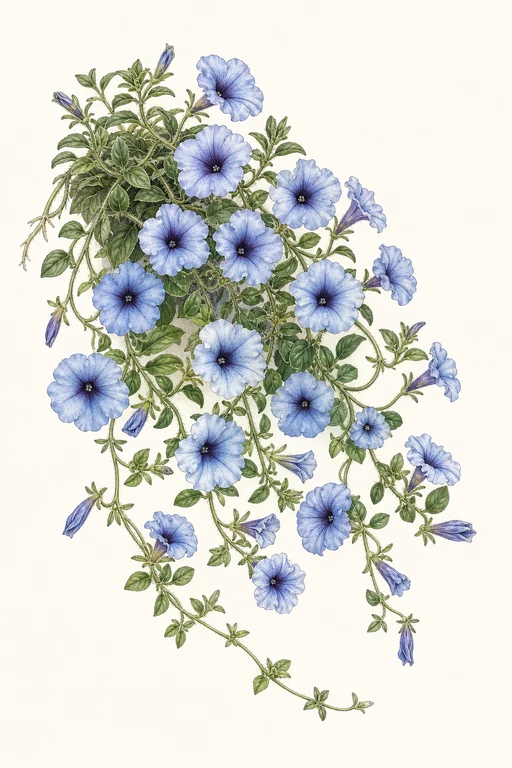
Imagine a cloud of sky—Surfinia Sky Blue spills in cascading ribbons of vivid, powdery blue blooms with a soft, velvety look and a crisp, starry center.
Each flower holds its color with a cool, refreshing intensity, creating a lush, trailing texture that reads like living lace from pot to ground. Ideal for hanging baskets, window boxes, and sprawling borders where its spreading habit can drape and fill with nonstop floral presence through the season.
Light: Full SunMaturity: 70 DaysHabit: Spreading
Location not set yet
Location not set yet
Enter your ZIP for local crop dates
Surfinia Sky Blue Planting Dates by USDA Zone
Estimated US hardiness-zone windows for sow, transplant, and harvest. Enter a US ZIP above for exact local dates, or open a zone below.
| Zone | Start Indoors | Sow / Transplant | Harvest |
|---|---|---|---|
| Zone 1a | Protected Environment Only | ||
| Zone 1b | Protected Environment Only | ||
| Zone 2a | Mar 16th | Jul 20th | Sep 28th – Aug 29th |
| Zone 2b | Mar 6th | Jul 10th | Sep 18th – Aug 25th |
| Zone 3a | Mar 6th | Jul 10th | Sep 18th – Sep 1st |
| Zone 3b | Mar 10th | Jul 14th | Sep 22nd – Sep 21st |
| Zone 4a | Mar 6th | Jul 10th | Sep 18th – Sep 24th |
| Zone 4b | Mar 4th | Jul 8th | Sep 16th – Sep 27th |
| Zone 5a | Feb 27th | Jul 3rd | Sep 11th – Sep 30th |
| Zone 5b | Feb 23rd | Jun 29th | Sep 7th – Oct 5th |
| Zone 6a | Feb 20th | Jun 26th | Sep 4th – Oct 10th |
| Zone 6b | Feb 14th | Jun 20th | Aug 29th – Oct 16th |
| Zone 7a | Feb 9th | Jun 15th | Aug 24th – Oct 20th |
| Zone 7b | Jan 30th | Jun 5th | Aug 14th – Oct 28th |
| Zone 8a | Jan 21st | May 27th | Aug 5th – Nov 5th |
| Zone 8b | Jan 12th | May 18th | Jul 27th – Nov 12th |
| Zone 9a | Dec 26th | May 1st | Jul 10th – Nov 26th |
| Zone 9b | Dec 1st | Apr 6th | Jun 15th – Dec 9th |
| Zone 10a | Continuous Production | ||
| Zone 10b | Continuous Production | ||
| Zone 11a | Continuous Production | ||
| Zone 11b | Continuous Production | ||
| Zone 12a | Continuous Production | ||
| Zone 12b | Continuous Production | ||
| Zone 13a | Continuous Production | ||
| Zone 13b | Continuous Production | ||
Crop Details
| Trait | Value |
|---|---|
| Days to Maturity | 70 |
| Sun Requirements | Full Sun |
| Growth Habit | Spreading |
| Support Needed | None |
| Planting Depth | Surface |
| Germination Temp (°F) | 75 |
| Min Soil Temp (°F) | 60 |
| Min Night Temp (°F) | 50 |
| Harden Off (days) | 7 |
Culinary Notes

Chef's Note
Even though it looks like living lace, the eating part is delicate—use it like an edible garnish, not a centerpiece, because the petals soften fast and can mute with heat. This ‘Sky Blue’ reads best cold: let its cool, faint sweetness ride on bright acid and creamy or effervescent foils.

Best Uses
- garnish for cocktails and spritz-style drinks
- tear-petal topping for salads and fruit plates
- ice-cube or cold-set garnish on creamy desserts

Flavor Profile

Kitchen Pairings
Frequently Asked Questions
What pest or disease is most likely on Petunia × atkinsiana (Surfinia Sky Blue) and how do I control it?
How often should I water Petunia × atkinsiana during peak growth?
How can I tell when Surfinia Sky Blue is ready to harvest?
Sowing Tips

Transplant Conditions
Wait until soil reaches 60°F and nights stay above 50°F before moving outdoors. Harden off for 7 days first.
Expert Note

For the most cascading growth and nonstop blooming, pinch once early and feed lightly but regularly with a balanced fertilizer after transplanting.