
Sweet Caroline Sweetheart Red
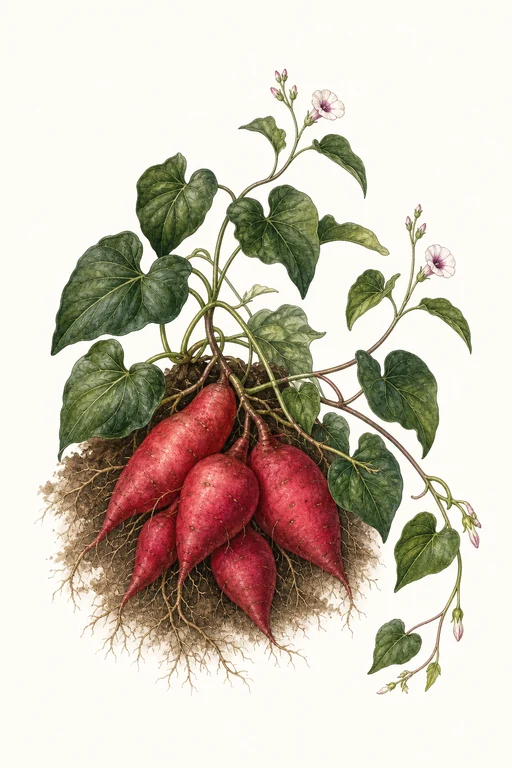
Velvety, heart-shaped tubers in a showy sweetheart red blush to a rich, burnished tone as they mature, with a tender, creamy interior that invites bold flavor.
Sweet Caroline Sweetheart Red grows as an ornamental sweet potato with a lush, cascading habit—perfect for gardeners who want edible beauty and instant curb appeal in warm-season beds and containers. Enjoy its naturally sweet, softly starchy character in roasted-style preparations, as well as fresh uses and vibrant mash-style sauces for a garden-to-table centerpiece.
Light: Full SunMaturity: 90 DaysHabit: Vine
Planting schedules and alerts are optimized for Columbus (Zone 6b).
Crop Dates
| Milestone | Date |
|---|---|
| Start Indoors | Direct Sow |
| Last Frost | Apr 25th |
| Transplant / Sow Outdoors | Apr 25th |
| Harvest Begins | Jul 24th |
| Harvest Ends | Oct 16th |
Crop Details
| Trait | Value |
|---|---|
| Days to Maturity | 90 |
| Sun Requirements | Full Sun |
| Growth Habit | Vine |
| Support Needed | Trellis |
| Planting Depth | Normal |
| Germination Temp (°F) | 75 |
| Min Soil Temp (°F) | 65 |
| Min Night Temp (°F) | 55 |
| Harden Off (days) | 10 |
Culinary Notes

Chef's Note
This ornamental-market sweet potato still behaves like a true tuber—velvety, creamy, and eager to caramelize, so you’ll get that burnished, spoonable texture with minimal fuss. I’d lean into fat + acid + spice (brown butter, citrus, smoked paprika) to keep the sweetness from tipping dessert-ward.

Best Uses
- hot-roast cubes or batons until edges go mahogany and centers stay plush
- mash and whip with butter/cream for a smooth, dessert-leaning side
- pan-sear slices for a soft core with browned, custardy corners
- starchy-sweet purée base for a velvety sauce over pork, chicken, or roasted veg

Flavor Profile

Kitchen Pairings
Frequently Asked Questions
What pest or disease commonly affects Ipomoea batatas (sweet potato) and what should I do?
How often should I water Ipomoea batatas during the main growing phase?
How can I tell when Ipomoea batatas is ready to harvest?
Sowing Tips

Transplant Conditions
Wait until soil reaches 65°F and nights stay above 55°F before moving outdoors. Harden off for 10 days first.

Direct Sow Preferred
Sensitive roots — does not transplant well. If starting indoors, use biodegradable pots and disturb roots as little as possible when moving outdoors.
Expert Note

Sweet Caroline Sweetheart Red is best grown from slips or rooted cuttings planted after warm weather arrives (it won’t tolerate cool soil).