
Sweet Dumpling
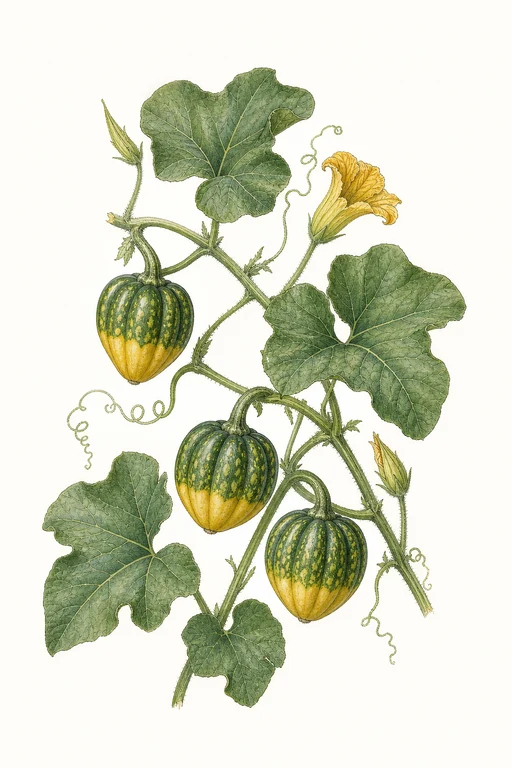
Sink your spoon into Sweet Dumpling’s warm, golden flesh—sweet, velvety, and richly fragrant with a gentle nutty depth.
This acorn squash forms compact, deep-ridged fruits with a creamy yellow-orange interior that turns wonderfully tender, making it a standout for roasting until caramel-soft, as well as for hearty purées and spoonable sides. Grow this 90-day favorite for a dependable winter harvest that stores beautifully and tastes like autumn in every bite.
Light: Full SunMaturity: 90 DaysHabit: Vine
Planting schedules and alerts are optimized for Columbus (Zone 6b).
Crop Dates
| Milestone | Date |
|---|---|
| Start Indoors | Apr 11th |
| Last Frost | Apr 25th |
| Transplant / Sow Outdoors | Apr 25th |
| Harvest Begins | Jul 24th |
| Harvest Ends | Oct 16th |
Crop Details
| Trait | Value |
|---|---|
| Days to Maturity | 90 |
| Sun Requirements | Full Sun |
| Growth Habit | Vine |
| Support Needed | Trellis |
| Planting Depth | Normal |
| Germination Temp (°F) | 70 |
| Min Soil Temp (°F) | 65 |
| Min Night Temp (°F) | 55 |
| Harden Off (days) | 12 |
Culinary Notes

Chef's Note
Sweet Dumpling acorn squash goes buttery without trying—its dense, velvety interior turns creamy in the oven and holds together in purées instead of thinning out. Aim for high heat so the ridges brown, then lean into sage and brown butter to amplify that nutty, autumnal sweetness.

Best Uses
- roast until edges caramelize, then serve spoon-soft as a hot side
- thick purée for stuffing, gnocchi filling, or swirled into risotto
- crush into a silky soup base with broth and a little fat
- steam-roast and mash for a spoonable table puree

Flavor Profile

Kitchen Pairings
Frequently Asked Questions
What pest or disease problem commonly affects Cucurbita pepo (Sweet Dumpling), and how can I treat it at home?
How often should I water Sweet Dumpling during the main growing phase, and what soil moisture level should I aim for?
How can I tell when Sweet Dumpling (Cucurbita pepo) is ready to harvest?
Sowing Tips

Transplant Conditions
Wait until soil reaches 65°F and nights stay above 55°F before moving outdoors. Harden off for 12 days first.

Direct Sow Preferred
Sensitive roots — does not transplant well. If starting indoors, use biodegradable pots and disturb roots as little as possible when moving outdoors.
Expert Note

Because winter squash dislikes root disturbance, use biodegradable pots and transplant only when soil is reliably warm to prevent stunting.