
Sweet Sunrise
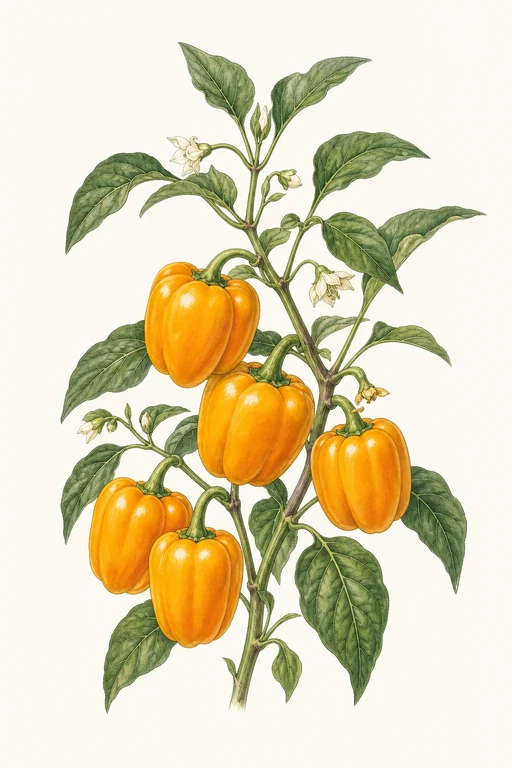
Sunrise-bright color leads the way—Sweet Sunrise bells ripen into warm, golden-orange with a glossy, lantern-like sheen that catches the light from garden to basket.
The flesh is crisp and sweet, with a thick, tender wall that stays pleasantly snappy rather than hollowing out, making each pepper feel substantial in the hand. Grow Sweet Sunrise for standout fresh use in salads and platters, plus vibrant color in roasted displays and quick, colorful sauces.
Light: Full SunMaturity: 80 DaysHabit: Bush
Crop Dates : 3a
| Milestone | Date |
|---|---|
| Start Indoors | Mar 20th |
| Last Frost | May 15th |
| Transplant / Sow Outdoors | Jul 10th |
| Harvest Begins | Sep 28th |
| Harvest Ends | Sep 1st |
Crop Details
| Trait | Value |
|---|---|
| Days to Maturity | 80 |
| Sun Requirements | Full Sun |
| Growth Habit | Bush |
| Support Needed | Stake |
| Planting Depth | Normal |
| Germination Temp (°F) | 80 |
| Min Soil Temp (°F) | 60 |
| Min Night Temp (°F) | 50 |
| Harden Off (days) | 10 |
Culinary Notes

Chef's Note
Sweet Sunrise has that substantial, thick-walled bell texture that stays crisp—perfect when you want sweetness without it collapsing into juiciness. Roast it hot for glossy caramelized edges, or keep it raw so each bite stays clean, snappy, and sweet.

Best Uses
- raw platter slices where they hold their snap (no limp edges)
- quick high-heat roast or broil for caramelized edges while keeping interior sweet
- thin strips in fresh salads or slaws that catch vinaigrette without turning watery
- blitzed into a fast color-forward sauce for grilled chicken or fish

Flavor Profile

Kitchen Pairings
Frequently Asked Questions
What pest or disease most often affects Capsicum annuum (bell/pepper types) and what should I do first?
How often should I water Capsicum annuum during the main growing phase (from transplant through fruit set)?
How can I tell when Capsicum annuum is ready to harvest around day ~80?
Sowing Tips

Transplant Conditions
Wait until soil reaches 60°F and nights stay above 50°F before moving outdoors. Harden off for 10 days first.
Expert Note

Start pepper seeds with steady warmth (70–85°F) and transplant only once soil is reliably ~60°F+ to prevent cold-stunting.