
Sweet Woodruff
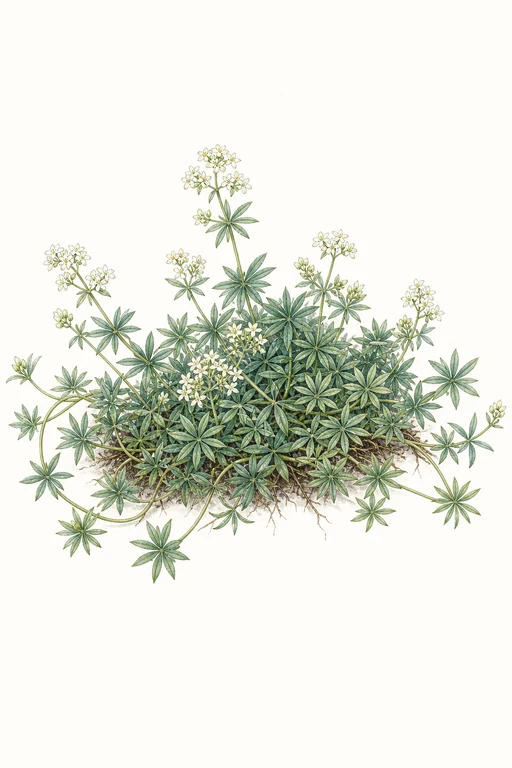
Breathe in the soft, honeyed fragrance that rises from Sweet Woodruff—an herb with a cool, meadow-fresh perfume and a velvety, ground-hugging grace.
At maturity, its slender stems bear whorls of tiny, starry leaves that feel delicate yet resilient, forming a lush carpet that lingers beautifully through the seasons. Grow Sweet Woodruff for its signature scent in shaded garden beds and woodland-style plantings, where it becomes a living, aromatic accent year after year.
Light: Part SunMaturity: 365 DaysHabit: Spreading
Planting schedules and alerts are optimized for Columbus (Zone 6b).
Crop Dates
| Milestone | Date |
|---|---|
| Last Frost | Apr 25th |
| Growing Approach | Protected Environment Only |
Crop Details
| Trait | Value |
|---|---|
| Days to Maturity | 365 |
| Sun Requirements | Part Sun |
| Growth Habit | Spreading |
| Support Needed | None |
| Planting Depth | Normal |
| Germination Temp (°F) | 65 |
| Min Soil Temp (°F) | 50 |
| Min Night Temp (°F) | 35 |
| Harden Off (days) | 7 |
Culinary Notes

Chef's Note
Sweet Woodruff tastes like the idea of summer—cool, honeyed, and intensely fragrant—so treat it like a spice and use it lightly. It shines in cold infusions and dairy/fruit aromatics where its volatile perfume stays intact.

Best Uses
- infuse into chilled drinks and syrups for a perfumed finish
- steep for light herbal tea and aromatic tonics
- use sparingly in fruit salads to carry scent without dominating
- infuse into cream or milk for a subtle woodland-sweet base

Flavor Profile

Kitchen Pairings
Frequently Asked Questions
What pest or disease commonly affects Galium odoratum (sweet woodruff), and how can I treat it?
How often should I water sweet woodruff during its main growing phase (about its first full season)?
How do I know when Galium odoratum is ready to harvest (leaves for drying/fresh use)?
Sowing Tips

Transplant Conditions
Wait until soil reaches 50°F and nights stay above 35°F before moving outdoors. Harden off for 7 days first.
Expert Note

Plant in humus-rich, evenly moist soil in light shade; once established, it’s slow to start but spreads steadily and benefits from occasional thinning.