
Sweet
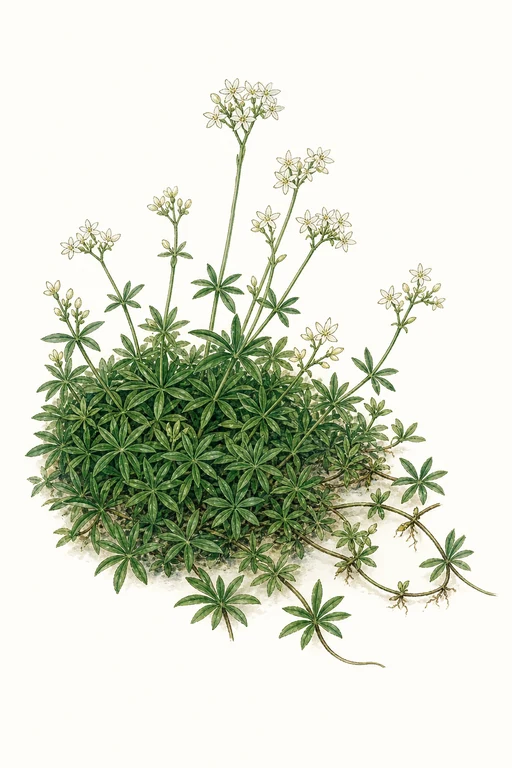
Fragrant as a woodland memory, Sweet Woodruff unfurls a soft carpet of starry, sweet-scented foliage that perfumes the air with a gentle, honeyed green note.
At maturity, its delicate leaves and airy sprays create a velvety texture underfoot, making it as pleasing to linger over as it is to admire. Ideal for naturalizing and edging shady garden rooms, Sweet Woodruff shines as a living groundcover that brings lasting fragrance and graceful movement to the landscape.
Light: Part SunMaturity: 365 DaysHabit: Spreading
Planting schedules and alerts are optimized for Columbus (Zone 6b).
Crop Dates
| Milestone | Date |
|---|---|
| Last Frost | Apr 25th |
| Growing Approach | Protected Environment Only |
Crop Details
| Trait | Value |
|---|---|
| Days to Maturity | 365 |
| Sun Requirements | Part Sun |
| Growth Habit | Spreading |
| Support Needed | None |
| Planting Depth | Normal |
| Germination Temp (°F) | 65 |
| Min Soil Temp (°F) | 45 |
| Min Night Temp (°F) | 28 |
| Harden Off (days) | 7 |
Culinary Notes

Chef's Note
Even though it’s a groundcover, Sweet Woodruff tastes like a whisper of honeyed grass—aromatic, not forceful—so treat it like an infusion ingredient. Steep briefly to keep it floral and gentle; long contact can tip toward a scratchy, bitter edge.

Best Uses
- infuse syrup or sugar for desserts
- springy garnish on fruit salads and custards
- steep into tea or a light cordial
- toss briefly into yogurt or whipped cream

Flavor Profile

Kitchen Pairings
Frequently Asked Questions
What pest or disease commonly affects Galium odoratum (sweet) and how do I treat it?
How often should I water Galium odoratum during its main growing phase?
How can I tell when Galium odoratum (sweet) is ready to harvest?
Sowing Tips

Transplant Conditions
Wait until soil reaches 45°F and nights stay above 28°F before moving outdoors. Harden off for 7 days first.
Expert Note

Sow/plant in moist, well-drained shade, and don’t over-fertilize—strong scent forms best when plants are kept slightly restrained and evenly moist.