
Tama Winter
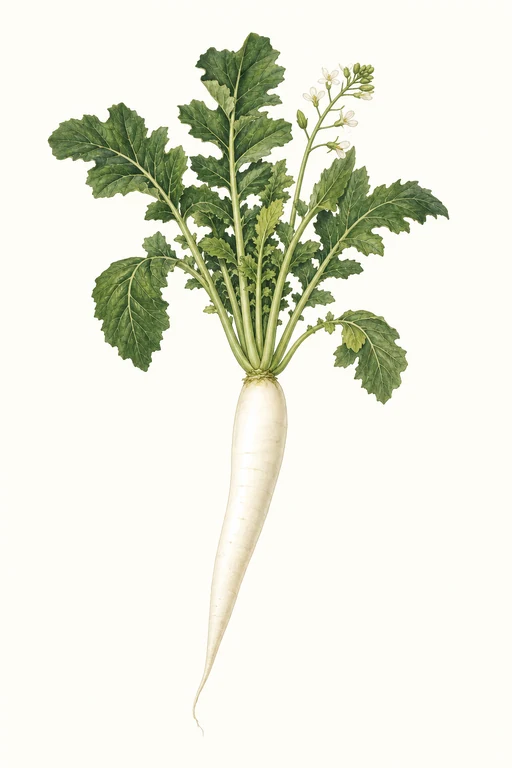
Sweetly aromatic and luxuriously mild, Tama Winter daikon forms long, tapered roots with a clean, crisp bite and a satiny, snow-white interior.
Its flavor stays gentle even as the season cools, making it a standout for fresh slicing, quick pickling, and roasting until tender—ideal for gardeners who want a dependable winter crop with elegant texture. Grow it for that satisfying, garden-fresh crunch that turns every harvest into a crisp, refreshing centerpiece.
Light: Full SunMaturity: 60 DaysHabit: Taproot
Planting schedules and alerts are optimized for Columbus (Zone 6b).
Crop Dates
| Milestone | Date |
|---|---|
| Start Indoors | Direct Sow |
| Last Frost | Apr 25th |
| Transplant / Sow Outdoors | Apr 25th |
| Harvest Begins | Jun 24th |
| Harvest Ends | Oct 16th |
Crop Details
| Trait | Value |
|---|---|
| Days to Maturity | 60 |
| Sun Requirements | Full Sun |
| Growth Habit | Taproot |
| Support Needed | None |
| Planting Depth | Normal |
| Germination Temp (°F) | 60 |
| Min Soil Temp (°F) | 40 |
| Min Night Temp (°F) | 28 |
| Harden Off (days) | Not Required |
Culinary Notes

Chef's Note
Tama Winter daikon hits that rare spot: sweetly aromatic and mild, with a crisp that stays snappy instead of turning harsh. Slice it paper-thin and it stays elegant under vinegar or salt-citrus, or roast it and let the peppery edge go soft into a silky, gentler sweetness.

Best Uses
- paper-thin winter slicing with salt and citrus
- quick pickling for sharp-but-not-punchy tang
- roasting until tender for silky edges and mild sweetness
- grating into fresh salads or daikon-topped rice bowls

Flavor Profile

Kitchen Pairings
Frequently Asked Questions
What’s a common pest or disease problem for Raphanus sativus (tama winter radish), and how do I control it?
How often should I water tama winter radish during the main growing phase, and what soil moisture should I aim for?
How can I tell when tama winter radish (Raphanus sativus) is ready to harvest?
Sowing Tips

Transplant Conditions
Wait until soil reaches 40°F and nights stay above 28°F before moving outdoors.
Expert Note

For best overwintering roots, sow in late summer/early fall and keep moisture steady so the roots size up before winter cold deepens.