
Tangerine Gem
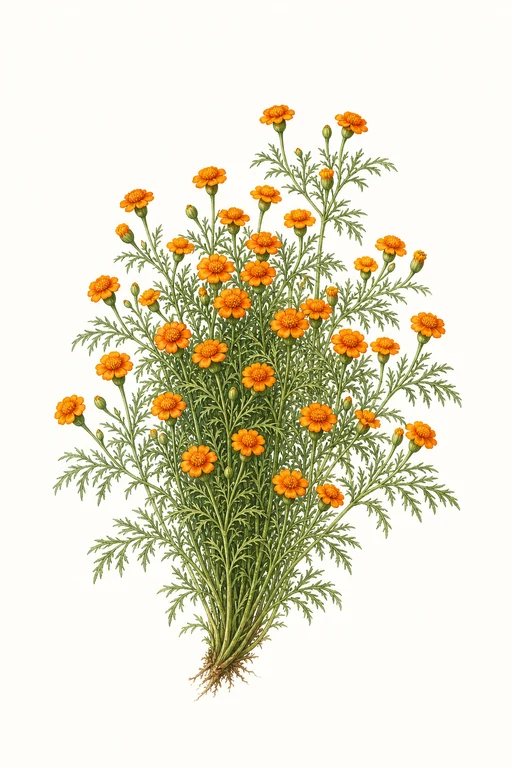
Sunlit tangerine blooms arrive like tiny lanterns, their warm citrus fragrance rising as petals unfurl in a fine, feathery haze.
Tangerine Gem forms compact, tidy plants with abundant single flowers and delicate, lacy foliage—offering a crisp, vividly aromatic bite and a bright accent for color-forward garnishes. Grow it for fresh floral beauty and for flavorful, fragrant use as an edible flower in salads, finishing blends, and quick pick-me-up infusions.
Light: Full SunMaturity: 60 DaysHabit: Upright
Planting schedules and alerts are optimized for Columbus (Zone 6b).
Crop Dates
| Milestone | Date |
|---|---|
| Start Indoors | Direct Sow |
| Last Frost | Apr 25th |
| Transplant / Sow Outdoors | Apr 25th |
| Harvest Begins | Jun 24th |
| Harvest Ends | Oct 16th |
Crop Details
| Trait | Value |
|---|---|
| Days to Maturity | 60 |
| Sun Requirements | Full Sun |
| Growth Habit | Upright |
| Support Needed | None |
| Planting Depth | Normal |
| Germination Temp (°F) | 70 |
| Min Soil Temp (°F) | 50 |
| Min Night Temp (°F) | 40 |
| Harden Off (days) | 5 |
Culinary Notes

Chef's Note
These tiny petals deliver a vivid tangerine aroma with a crisp, feather-light chew—more like citrus zest with a gentle herbal snap than a heavy flower. Use them at the end so their fragrance stays sharp, especially on cool or lightly dressed plates.

Best Uses
- scatter over salads to perfume the top layer without sogging
- use as a high-impact garnish on rice, roasted chicken, or grilled fish
- fold petals into finishing salts or compound butters for instant citrusy lift
- quick infuse in syrups or vinegar for a fragrant, candy-bright drizzle

Flavor Profile

Kitchen Pairings
Frequently Asked Questions
What pest problem is most common on Tagetes tenuifolia (Tangerine Gem), and how can I control it at home?
How often should I water Tangerine Gem during the main growing phase, and what soil moisture level does it need?
How do I tell when Tangerine Gem is ready to harvest?
Sowing Tips

Transplant Conditions
Wait until soil reaches 50°F and nights stay above 40°F before moving outdoors. Harden off for 5 days first.

Direct Sow Preferred
Sensitive roots — does not transplant well. If starting indoors, use biodegradable pots and disturb roots as little as possible when moving outdoors.
Expert Note

For the most flowers and best flavor, grow in full sun and avoid over-fertilizing—thin, even moisture and lean soil produce the compact, abundant blooms edible in salads.