
Tardivo Di Treviso
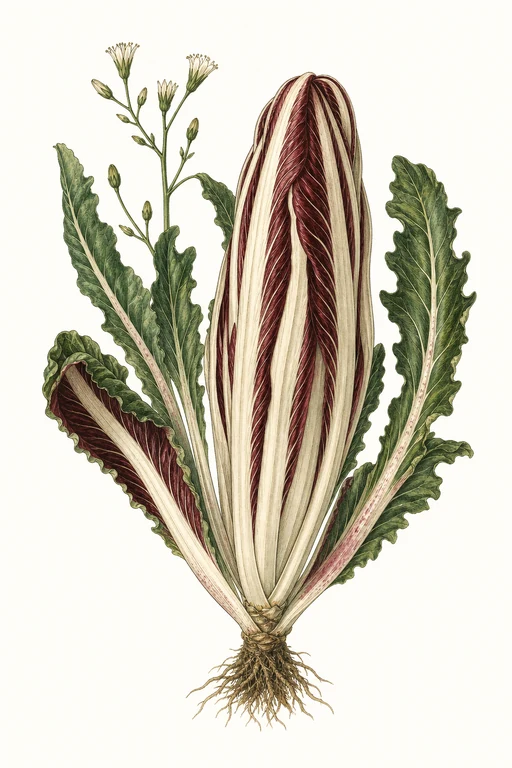
Crisp as a cool morning breeze, Tardivo Di Treviso forms elegant, elongated heads with a luminous, honeyed glow—tender leaves that unfold in tight layers and melt into a pleasantly sweet, gently bitter finish.
Expect a satiny crunch and a refined, aromatic bite that shines in late-season radicchio displays. Grow for fresh salads, braising-style tenderness, and striking roasted or grilled plates, where its color and texture become the centerpiece.
Light: Full SunMaturity: 75 DaysHabit: Rosette
Planting schedules and alerts are optimized for Columbus (Zone 6b).
Crop Dates
| Milestone | Date |
|---|---|
| Start Indoors | Direct Sow |
| Last Frost | Apr 25th |
| Transplant / Sow Outdoors | Apr 25th |
| Harvest Begins | Jul 9th |
| Harvest Ends | Oct 16th |
Crop Details
| Trait | Value |
|---|---|
| Days to Maturity | 75 |
| Sun Requirements | Full Sun |
| Growth Habit | Rosette |
| Support Needed | None |
| Planting Depth | Normal |
| Germination Temp (°F) | 60 |
| Min Soil Temp (°F) | 40 |
| Min Night Temp (°F) | 28 |
| Harden Off (days) | Not Required |
Culinary Notes

Chef's Note
Tardivo di Treviso brings a cool-weather bitterness that stays elegant rather than harsh, with a satiny snap that survives hot contact when you cook it in wedges. It’s a radicchio you want front and center—dress with fat and salt, add something tangy like balsamic, and let the honeyed-sweet start fade into that clean bitter finish.

Best Uses
- late-season shaved salad with a light, oily vinaigrette
- grilled or roasted wedges so the edges char while the core stays crisp-tender
- braise/steam until it turns supple, then dress with a sharp, creamy element
- hot-and-cold radicchio plates where bitterness gets tempered by fat and salt

Flavor Profile

Kitchen Pairings
Frequently Asked Questions
What pest or disease commonly affects Cichorium intybus (Tardivo di Treviso) and how can I manage it at home?
During the main growing phase, how often should I water Tardivo di Treviso (Cichorium intybus) and what soil moisture level should I aim for?
How can I tell when my Tardivo di Treviso (Cichorium intybus) is ready to harvest?
Sowing Tips

Transplant Conditions
Wait until soil reaches 40°F and nights stay above 28°F before moving outdoors.
Expert Note

For late Treviso-style radicchio, prioritize even moisture and cool conditions—harvest after a hard cool to deepen color and reduce harshness.