
SproutSmart
SproutSmart™ Intelligent Garden Sowing

Tidal Wave Red Velour

Family: Solanaceae Garden Petunia

Planting Schedule

Provide your location or planting zone to unlock dates and add Tidal Wave Red Velour to a garden.

Velvety blooms spill over the edge like a tide drawn in deep, velour-red velvet—rich, velvety petals with a softly luminous sheen.

Tidal Wave Red Velour forms a lush, trailing mat of color that stays striking through the season, delivering abundant flowers with a plush, velvety texture that looks as good as it feels. Ideal for full-sun beds, borders, and hanging displays, where its spreading habit turns planters and walkways into a continuous ribbon of red.

Light: Full SunMaturity: 70 DaysHabit: Spreading
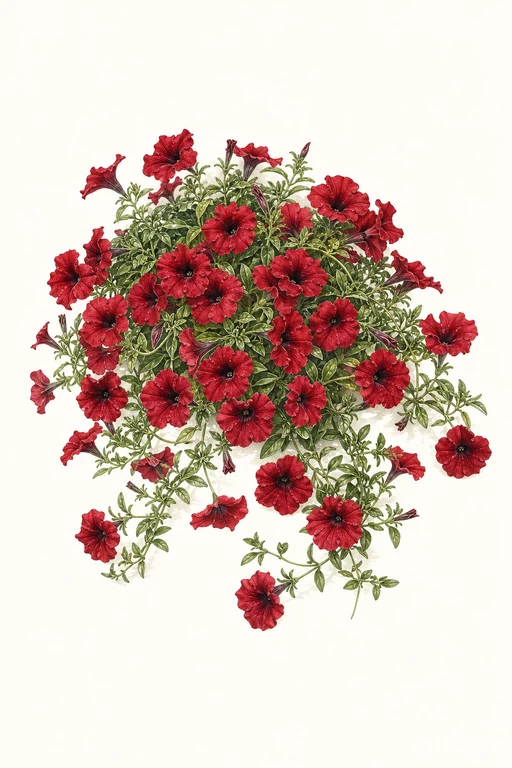
Botanical illustration of Tidal Wave Red Velour

Location not set yet

Location not set yet

Enter your ZIP for local crop dates

Tidal Wave Red Velour Planting Dates by USDA Zone

Estimated US hardiness-zone windows for sow, transplant, and harvest. Enter a US ZIP above for exact local dates, or open a zone below.

Zone Start Indoors Sow / Transplant Harvest
Zone 1a Protected Environment Only
Zone 1b Protected Environment Only
Zone 2a Mar 16th Jun 8th Aug 17th – Aug 29th
Zone 2b Mar 6th May 29th Aug 7th – Aug 25th
Zone 3a Mar 6th May 29th Aug 7th – Sep 1st
Zone 3b Mar 10th Jun 2nd Aug 11th – Sep 21st
Zone 4a Mar 6th May 29th Aug 7th – Sep 24th
Zone 4b Mar 4th May 27th Aug 5th – Sep 27th
Zone 5a Feb 27th May 22nd Jul 31st – Sep 30th
Zone 5b Feb 23rd May 18th Jul 27th – Oct 5th
Zone 6a Feb 20th May 15th Jul 24th – Oct 10th
Zone 6b Feb 14th May 9th Jul 18th – Oct 16th
Zone 7a Feb 9th May 4th Jul 13th – Oct 20th
Zone 7b Jan 30th Apr 24th Jul 3rd – Oct 28th
Zone 8a Jan 21st Apr 15th Jun 24th – Nov 5th
Zone 8b Jan 12th Apr 6th Jun 15th – Nov 12th
Zone 9a Dec 26th Mar 20th May 29th – Nov 26th
Zone 9b Dec 1st Feb 23rd May 4th – Dec 9th
Zone 10a Continuous Production
Zone 10b Continuous Production
Zone 11a Continuous Production
Zone 11b Continuous Production
Zone 12a Continuous Production
Zone 12b Continuous Production
Zone 13a Continuous Production
Zone 13b Continuous Production

Crop Details

TraitValue
Days to Maturity70
Sun RequirementsFull SunFull sun
Growth HabitSpreading
Support NeededNone
Planting DepthSurface
Germination Temp (°F)75
Min Soil Temp (°F)55
Min Night Temp (°F)50
Harden Off (days)7

Culinary Notes


Chef's Note

Even when the petals look plush and theatrical, you want to treat them gently—heat makes them slump fast. Best kept raw or briefly steeped, where their mild sweetness and petal perfume read clean against bright citrus and creamy bases.

Best Uses

  • as a garnish on cool plates where the velour texture won’t get crushed
  • folded into finishing salts or syrups for color-forward floral sweetness
  • mixed into cold drinks or spritz-style infusions (so it doesn’t cook out)
  • chopped into a delicate salad topping to add a soft, edible “bloom”

Flavor Profile

velvety, rose-petal–like aroma mildly sweet with a faint green bitterness tender petals that can soften quickly

Kitchen Pairings

honey lemon zest sparkling water or brut champagne Greek yogurt vanilla dark chocolate

Frequently Asked Questions


What are common pests or diseases on Petunia × atkinsiana, and how do I treat them?
Petunia × atkinsiana is especially prone to aphids and spider mites, which cluster on new growth and can cause sticky residue or stippled leaves. Spray affected plants with a strong stream of water, then apply insecticidal soap and repeat every 5–7 days until no pests are visible. If you see gray mold or leaf spots (often after humid, wet weather), remove affected leaves, improve airflow, and water at the soil line rather than overhead.
How often should I water Petunia × atkinsiana during active growth?
During the main growing phase, keep the root ball evenly moist but not soggy—water when the top 1 inch of soil feels dry. In full sun and hot weather, hanging baskets and containers may need watering daily, while in-ground plants may need watering every few days. Avoid leaving plants in standing water, because Petunia × atkinsiana is prone to rot when the soil stays wet.
How can I tell when Petunia × atkinsiana is ready to harvest?
Petunia × atkinsiana is typically grown for flowers rather than “harvestable” fruit, so harvest readiness is when you have open, fully colored blooms. Pick flowers as soon as they’re fully open and continue deadheading to trigger new buds and keep the plant producing through its ~70-day cycle from seed/starting to peak bloom. If you’re growing from seed, expect your first steady wave of flowering around the 10–11 week mark and continue removing spent blooms regularly.